
Fertility Treatment Costs – Impact on Access and Care

Facing infertility can be overwhelming, especially when the price tag for fertility treatments creates uncertainty and limits choices for people living in cities around the world. For women under 40 who want affordable, AI-enhanced options, understanding costs is more than just comparing numbers. Global cost disparities in assisted reproductive technology often mean expenses far exceed typical incomes while myths about access and coverage continue. This guide clears the confusion about fertility treatment expenses, hidden financial risks, and smarter ways to plan your journey toward parenthood.
Table of Contents
Key Takeaways
Point | Details |
Understanding Fertility Treatment Costs | Patients must navigate a complex financial landscape that varies significantly across different treatments and healthcare systems. |
Misconceptions About Coverage | Not all insurance plans cover fertility treatments, and costs often exceed household incomes, impacting access and choices. |
Hidden Costs | Fertility treatments come with additional expenses beyond the initial fees, including lost productivity and emotional support, requiring proactive financial planning. |
Role of Comprehensive Insurance | Robust insurance coverage can increase access to fertility treatments, emphasizing the need for patients to thoroughly explore their benefits and coverage options. |
Defining Fertility Treatment Costs and Misconceptions
Fertility treatment costs represent a complex financial landscape that significantly impacts patient access and reproductive healthcare decisions. Global cost disparities reveal critical challenges in affordable reproductive medicine, creating substantial barriers for individuals seeking fertility interventions.
Understanding these costs requires examining multiple interconnected factors that influence treatment expenses:
Direct medical procedure costs
Diagnostic testing fees
Medication expenses
Potential multiple treatment cycle requirements
Geographic and healthcare system variations
Contrary to popular belief, fertility treatments are not uniformly expensive or accessible across different economic contexts. Research demonstrates significant variations in treatment affordability, with costs often exceeding average household incomes in many regions. Economic barriers can prevent individuals from accessing essential reproductive healthcare, creating profound personal and societal implications.
The financial landscape of fertility treatments involves several critical misconceptions that patients must understand:
Assuming all insurance plans cover fertility treatments
Believing a single treatment guarantees successful pregnancy
Overlooking potential additional expenses beyond initial consultation
Expecting uniform pricing across different clinics and regions
Willingness to pay emerges as a crucial metric in evaluating fertility treatment economics. Systematic reviews exploring treatment value demonstrate that patients’ perspectives on treatment costs vary dramatically based on individual circumstances, cultural backgrounds, and personal financial situations.
Pro tip: Request comprehensive cost breakdowns from fertility clinics, including potential additional expenses, to develop a realistic financial planning strategy for your reproductive healthcare journey.
Types of Fertility Treatments and Associated Expenses
Fertility treatments encompass a diverse range of medical interventions designed to help individuals and couples overcome reproductive challenges. Global ART cost analysis reveals complex treatment landscapes that vary dramatically across different healthcare systems and economic contexts.
The primary types of fertility treatments include:
In Vitro Fertilization (IVF): Most comprehensive and expensive treatment
Intrauterine Insemination (IUI): Less invasive and typically more affordable
Intracytoplasmic Sperm Injection (ICSI): Advanced technique for specific male fertility issues
Egg or Embryo Freezing: Preservation technologies for future reproductive options
Surrogacy: Complex and most expensive reproductive intervention
Each treatment option carries unique financial considerations and potential success rates. Diagnostic expenses often precede actual treatment, adding substantial upfront costs. IVF, for instance, can range from $12,000 to $25,000 per cycle, with potential multiple cycle requirements significantly increasing total expenses.

Here’s how different fertility treatments compare in terms of financial and practical considerations:
Treatment Type | Typical Cost Range | Typical Success Rate | Additional Considerations |
IVF | $12,000–$25,000/cycle | Moderate to high | May require multiple cycles |
IUI | $1,000–$3,000/cycle | Lower than IVF | Less invasive, limited by diagnosis |
ICSI | $15,000–$30,000/cycle | Moderate | Best for male infertility cases |
Egg/Embryo Freezing | $6,000–$12,000 | Varies with age | Long-term storage fees apply |
Surrogacy | $75,000–$150,000+ | High if surrogate | Includes legal and agency fees |
Patients must consider several critical financial factors when exploring fertility treatments:
Initial consultation and diagnostic testing fees
Medication costs for hormonal stimulation
Potential multiple treatment cycle requirements
Additional procedures like genetic screening
Follow-up medical monitoring and support
Insurance coverage plays a crucial role in determining treatment accessibility. Many insurance plans provide limited or no fertility treatment coverage, forcing patients to navigate complex financial landscapes and potentially explore alternative funding mechanisms.
Pro tip: Request detailed, itemized cost breakdowns from fertility clinics and explore potential financial assistance programs or clinical trial opportunities to manage treatment expenses.
How Costs Shape Patient Choices and Outcomes
Patient decision-making in fertility treatments reveals a complex interplay between financial constraints and reproductive goals. Patients consistently demonstrate a willingness to invest significant resources in pursuing their fertility objectives, despite substantial economic challenges.
Key factors influencing patient treatment choices include:
Perceived treatment success rates
Total out-of-pocket expenses
Insurance coverage limitations
Personal financial resources
Emotional and psychological investment
Age-related fertility windows
Financial barriers dramatically impact treatment accessibility and patient strategies. Research indicates that while cost is a critical consideration, patients often prioritize potential success over immediate financial constraints. This phenomenon suggests a deep emotional and personal commitment to achieving reproductive goals.
Patients typically navigate treatment choices through several strategic approaches:
Comparing multiple clinic pricing structures
Exploring financial assistance programs
Considering alternative or phased treatment options
Evaluating long-term financial implications
Weighing emotional costs against financial investments
Economic evaluations in fertility care demonstrate that treatment effectiveness remains the primary driver of patient decisions. Patients are willing to accept significant financial burdens when they perceive a higher likelihood of successful outcomes, underscoring the deeply personal nature of reproductive healthcare choices.
Fertility treatment decisions are never purely financial - they represent profound personal journeys toward parenthood.
Pro tip: Create a comprehensive financial plan that includes potential treatment costs, insurance coverage, and alternative funding sources before beginning your fertility journey.
The Role of Insurance, Coverage, and AI Innovations
Comprehensive insurance coverage transforms fertility treatment access by reducing significant financial barriers that traditionally prevent individuals from pursuing reproductive healthcare. Insurance policies play a critical role in determining patient outcomes and treatment possibilities.
Key aspects of insurance coverage in fertility treatments include:
Variation in state-mandated fertility treatment requirements
Differences in coverage for diagnostic procedures
Partial versus comprehensive treatment coverage
Annual and lifetime benefit limits
Specific exclusions for certain procedures
Criteria for treatment eligibility
Technological innovations are reshaping insurance considerations in fertility care. Artificial Intelligence (AI) enables more precise treatment predictions, potentially influencing how insurance providers assess risk and design coverage models. These advancements create opportunities for more personalized and efficient insurance approaches.
Patients navigating insurance coverage typically must:
Carefully review specific policy details
Understand network provider restrictions
Document medical necessity thoroughly
Explore supplemental insurance options
Consider employer-sponsored fertility benefits
Population-wide insurance studies demonstrate that comprehensive coverage can increase treatment utilization by nearly 50%, highlighting the transformative potential of robust insurance support.
Insurance is not just financial protection - it’s a gateway to reproductive healthcare possibilities.
Pro tip: Request a detailed insurance consultation to understand exact fertility treatment coverage, including potential AI-enhanced assessment strategies that might impact your benefits.
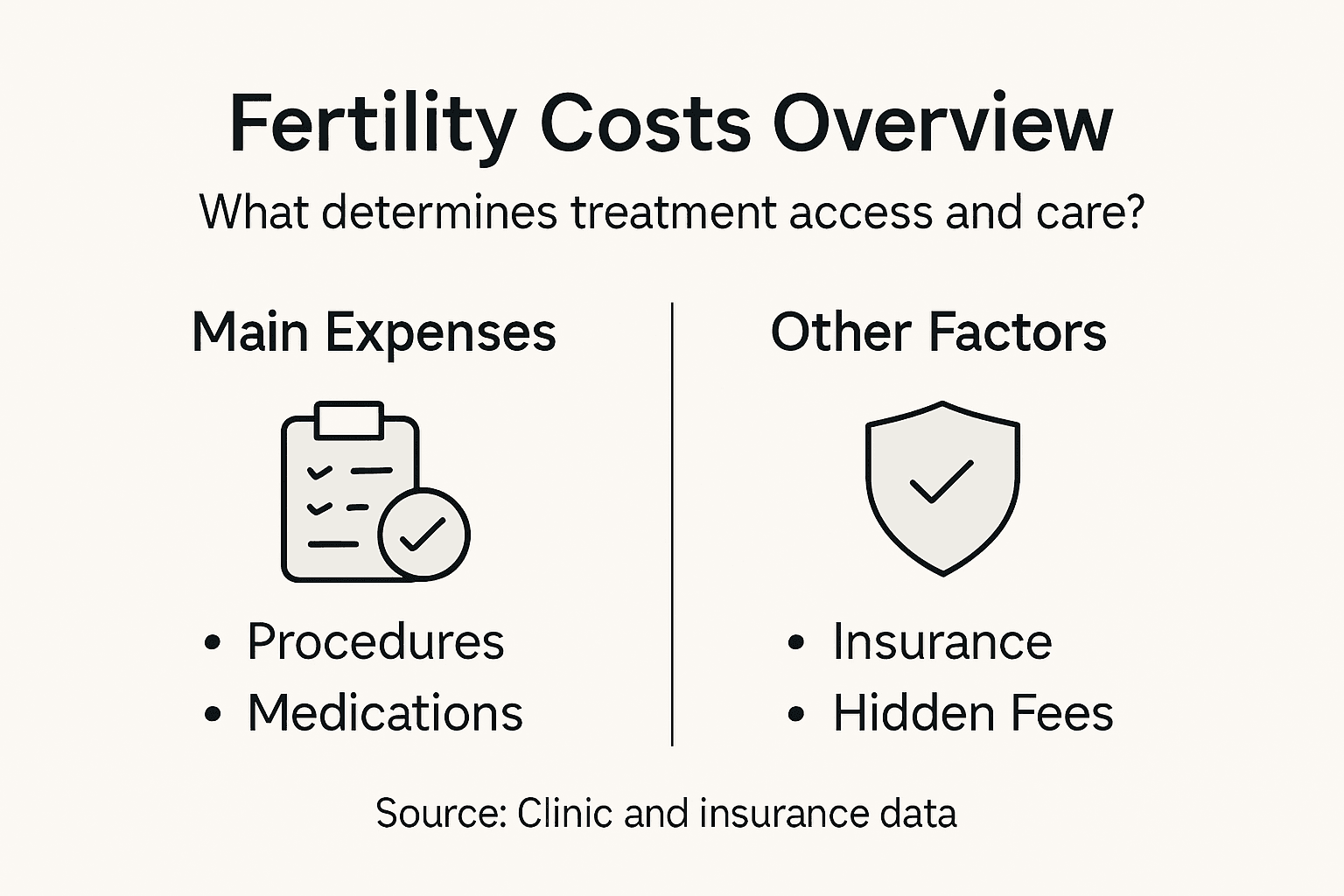
Financial Risks, Hidden Costs, and Avoiding Pitfalls
Fertility treatment hidden costs extend far beyond medical expenses and encompass complex personal, professional, and emotional dimensions that patients must carefully navigate.
Typical hidden financial risks include:
Unexpected medical procedure costs
Lost work productivity
Mental health support expenses
Additional diagnostic testing
Potential income reduction during treatment
Emotional counseling fees
Travel and accommodation expenses
Financial planning becomes crucial in managing fertility treatment expenses. Many patients underestimate the comprehensive financial impact, which can extend well beyond initial treatment estimates. Direct medical costs represent only a fraction of the total financial commitment patients ultimately encounter.
Summary of common hidden costs that impact fertility treatment budgeting:
Expense Category | Impact on Patients | Typical Amount or Range |
Lost Work Productivity | May require time off work | Varied, up to $5,000+ |
Travel/Accommodation | Required for distant clinics | $1,000–$10,000 per journey |
Emotional Counseling | Supports mental health | $100–$200 per session |
Additional Diagnostics | Can increase total costs | $500–$5,000+ annually |
Medication Side Effects | May need extra care | $500–$2,000 per cycle |
Patients should strategically prepare by:
Creating comprehensive budget projections
Establishing emergency savings funds
Exploring flexible workplace accommodations
Understanding full treatment pathway expenses
Researching supplemental financial assistance programs
Comprehensive cost transparency frameworks help patients better understand potential financial risks associated with fertility treatments, enabling more informed decision-making and reducing unexpected financial stress.
Financial preparedness is not just about money - it’s about creating emotional resilience throughout your fertility journey.
Pro tip: Develop a detailed financial spreadsheet tracking potential direct and indirect expenses, including contingency funds for unexpected treatment variations or additional medical needs.
Overcome Financial Barriers to Fertility Care with Advanced AI Solutions
Fertility treatment costs create significant challenges in access and care, often causing stress and uncertainty for those eager to start their journey. Understanding the many hidden expenses and navigating insurance limitations can feel overwhelming. This article highlights that patients frequently face financial barriers, emotional strain, and confusing pricing, leading to difficult decisions about treatment options. If you are looking for affordable and personalized fertility solutions that reduce time and costs without sacrificing success, it is crucial to explore innovations that can transform these obstacles.
At Aurea Fertility, we embrace AI-powered technologies designed to streamline your fertility journey. Our clinic minimizes unnecessary procedures and offers AI-guided protocols for embryo monitoring, egg freezing, and male fertility testing. This approach not only enhances success rates but also significantly lowers treatment expenses and duration. With 24/7 patient support and rapid treatment pathways typically completed in around two weeks, Aurea Fertility empowers you to make confident choices while reducing emotional and financial burdens.
Ready to take control of your fertility care with expert guidance and cutting-edge technology? Visit Aurea Fertility to discover how we can help you navigate costs and access personalized treatments faster. Your reproductive health deserves transparency, innovation, and compassionate support—start your journey today.
Frequently Asked Questions
What factors influence the cost of fertility treatments?
The cost of fertility treatments can be influenced by several factors including direct medical procedure costs, diagnostic testing fees, medication expenses, the need for potential multiple treatment cycles, and variations based on geographic location and healthcare systems.
Are fertility treatments covered by insurance?
Insurance coverage for fertility treatments varies significantly. Many plans may offer limited or no coverage, which can create financial barriers for patients seeking these services. It is essential to carefully review specific policy details to understand the extent of coverage.
What are the hidden costs associated with fertility treatments?
Hidden costs can include unexpected medical procedure expenses, lost work productivity, mental health support, additional diagnostic tests, and travel or accommodation expenses. Patients should plan for these possible costs to better manage their financial commitments.
What types of fertility treatments are available and their typical costs?
Common fertility treatments include In Vitro Fertilization (IVF), which ranges from $12,000 to $25,000 per cycle, Intrauterine Insemination (IUI) costing between $1,000 and $3,000, and Surrogacy, which can exceed $75,000. Each treatment has its unique financial considerations and potential success rates.
Recommended


Comments