
Step-by-Step Guide to Egg Freezing for Women

Finding the right time to take control of your fertility journey can feel overwhelming, especially with work and life pulling you in different directions. For women under 40, egg freezing offers flexibility, but the process must fit your unique health profile and personal goals. With the rise of AI-driven assessment protocols, you can now access tailored, data-backed guidance that delivers clarity and confidence before you commit—setting you up for informed decisions and a smoother path ahead.
Table of Contents
Quick Summary
Essential Insight | Clear Explanation |
1. Personal Eligibility Assessment is Crucial | Utilize AI tools to analyze your health data, ensuring egg freezing aligns with your unique fertility profile and goals. |
2. Personalized Protocols Improve Outcomes | AI-driven recommendations on medication and timing are tailored to your specific ovarian reserve, maximizing egg quality and quantity during stimulation. |
3. Real-Time Monitoring Enhances Retrieval Success | AI-assisted egg retrieval provides immediate quality assessments, allowing medical teams to make informed decisions on which eggs to freeze. |
4. Follow Personalized Guidelines During Preparation | Adhere strictly to your individualized medication protocol, as deviations can negatively impact your final egg count and quality. |
5. Ongoing Support is Key Post-Freezing | Stay connected with your clinic for monitoring and accessing detailed egg viability reports, setting you up for future fertility planning. |
Step 1: Assess eligibility using AI-driven protocols
Egg freezing isn’t right for everyone, and that’s okay. Before committing to this process, you need to understand whether it aligns with your fertility profile and health goals. AI-driven assessment protocols take the guesswork out of this critical first step by analyzing your individual data to determine candidacy.
Here’s what happens during AI-powered eligibility assessment:
Review your medical history - The system examines your age, menstrual cycle patterns, previous fertility treatments, and overall health status to establish baseline eligibility
Analyze key biomarkers - AI evaluates hormone levels like FSH (follicle-stimulating hormone) and AMH (anti-müllerian hormone) to predict ovarian reserve and egg quality potential
Assess personalized protocol fit - The algorithm matches your specific profile to stimulation protocols designed to maximize egg retrieval success for your unique circumstances
Generate clarity on timing - AI-driven decision aids provide comprehensive, personalized information that significantly reduces decisional conflict and increases your preparedness for this complex decision
Research shows that AI-powered decision aids substantially improve women’s clarity about egg freezing and help you feel genuinely prepared for the decision ahead.
The beauty of AI assessment is personalization. Rather than applying one-size-fits-all criteria, the system tailors recommendations based on how AI transforms fertility protocols to your individual circumstances, including your age, ovarian reserve, and response patterns.
After assessment, you’ll receive a detailed eligibility report. This isn’t just a yes or no answer. It includes your predicted outcomes, recommended stimulation approach, and realistic expectations about egg quantity and quality. You’ll know exactly what to expect before moving forward.
AI assessment transforms eligibility evaluation from subjective guessing into data-driven precision tailored specifically to your reproductive profile.
Don’t skip this step, even if you feel certain about your choice. The insights from AI analysis of egg quality and stimulation outcomes often reveal optimization opportunities you wouldn’t discover otherwise.
Pro tip: Gather recent blood work results and detailed reproductive history before your assessment so the AI system has complete data—incomplete information leads to less accurate eligibility predictions and recommendations.
Step 2: Prepare for egg collection and stimulation
Preparation is where egg freezing success truly begins. This phase involves detailed planning, hormonal assessments, and personalized medication protocols designed specifically for your body’s response patterns. You’re moving from assessment into active preparation for retrieval.
Your preparation timeline typically spans 10-14 days and includes several key components:
Complete hormonal baseline testing - Blood work measures your FSH, LH, and estrogen levels to confirm your cycle readiness and establish starting points for medication dosing
Receive your individualized protocol - Your stimulation plan specifies exact medication types, dosages, and injection timing based on your ovarian reserve markers and predicted response
Learn injection techniques - You’ll practice administering daily gonadotropin injections or work with a clinic nurse for administration at scheduled appointments
Schedule monitoring appointments - Ultrasounds and blood work during stimulation track follicle growth and hormone levels to optimize timing for egg retrieval
The stimulation phase itself uses tailored medication regimens and timing protocols to maximize both egg quantity and quality while minimizing risks. Most women follow a multiple-dose GnRH antagonist protocol combined with daily gonadotropin injections to achieve optimal oocyte yield.

During this time, you’ll need to adjust your lifestyle slightly. Avoid strenuous exercise, heavy lifting, and high-impact activities that could stress your ovaries as they enlarge from stimulation. Stay hydrated and maintain consistent sleep patterns—your body needs stability during this hormonal shift.
You’ll also receive detailed instructions about trigger shots, which are crucial injections that prepare eggs for final maturation exactly 35-36 hours before retrieval. Missing this timing window can significantly impact success, so calendar alerts and reminders become your best friends.
Preparation success depends on following your personalized protocol exactly as prescribed—small deviations in timing or dosage can affect your final egg count and quality.
Expect some physical sensations during stimulation: mild bloating, breast tenderness, and occasional mild discomfort are normal. However, sharp pain or severe bloating warrants immediate contact with your clinic.
Many career-focused women worry about managing stimulation during work. Strategies for balancing egg freezing with professional commitments help you maintain productivity while prioritizing your health during this intensive phase.
Pro tip: Set daily phone reminders for injection times and create a simple log tracking injection dates, follicle measurements, and hormone levels—this documentation helps your clinic make real-time adjustments if your response differs from predictions.
Step 3: Undergo egg retrieval with AI-assisted monitoring
Egg retrieval day arrives after approximately 10-14 days of stimulation. This is the moment when months of planning and preparation converge. You’ll undergo a minimally invasive procedure while AI-assisted technology monitors egg quality in real time, providing your medical team with objective data to optimize outcomes.
Here’s what happens during your retrieval procedure:
Check in and prepare - You’ll arrive at the clinic early morning after fasting, change into a procedure gown, and meet your anesthesia team for a brief pre-procedure discussion
Receive light sedation - Mild anesthesia keeps you comfortable and relaxed throughout the 15-20 minute procedure while remaining safe and easily reversible
Undergo transvaginal ultrasound-guided aspiration - The physician uses ultrasound guidance to identify mature follicles and gently aspirate eggs from your ovaries using a thin needle
Benefit from real-time AI assessment - As eggs are retrieved, AI-powered oocyte assessment tools evaluate egg quality objectively, helping embryologists determine viability immediately
The AI monitoring during retrieval represents a significant advantage. Rather than relying solely on visual assessment, personalized AI-driven protocols for egg freezing provide precise data on each egg’s maturity and quality status. This real-time feedback allows your team to make informed decisions about which eggs are optimal for freezing.
After retrieval, expect mild discomfort, cramping, and bloating. Rest the remainder of the day and take prescribed pain medication if needed. Most women resume normal activities within 24-48 hours, though you’ll want to avoid strenuous exercise for several days.
You’ll receive a detailed retrieval report showing your egg count and quality breakdown. This documentation becomes important reference material for future treatment decisions.
AI-assisted monitoring transforms retrieval from a clinical procedure into a precision data-gathering event that immediately informs which eggs are most viable for preservation.
Contact your clinic immediately if you experience severe pain, heavy vaginal bleeding, or signs of ovarian hyperstimulation syndrome like extreme bloating or difficulty breathing.
Pro tip: Bring comfortable, loose clothing to your retrieval appointment and arrange for someone to drive you home since sedation prevents you from operating vehicles—use this recovery time to rest completely rather than attempting normal productivity.
Step 4: Verify successful freezing and receive ongoing support
Your eggs are now safely frozen, but this step is about confirming success and establishing a relationship with your clinic for years to come. Verification involves receiving detailed reports about your frozen eggs and understanding the support systems available as you plan for their future use.
Immediately after retrieval and freezing, you’ll receive comprehensive documentation:
Egg count and quality report - Total number of eggs retrieved, maturity status, and how many successfully froze with their viability ratings
Cryopreservation details - Information about the freezing method used, storage location, and backup systems ensuring safety
Viability predictions - AI-powered assessments predicting whether frozen eggs will develop into viable embryos upon future thawing
Storage confirmation - Official documentation confirming your eggs are in long-term cryogenic storage with secure backup protocols
Understanding your viability predictions matters significantly. AI tools provide personalized insights on embryo development potential based on your specific egg characteristics, helping you set realistic expectations for future cycles.
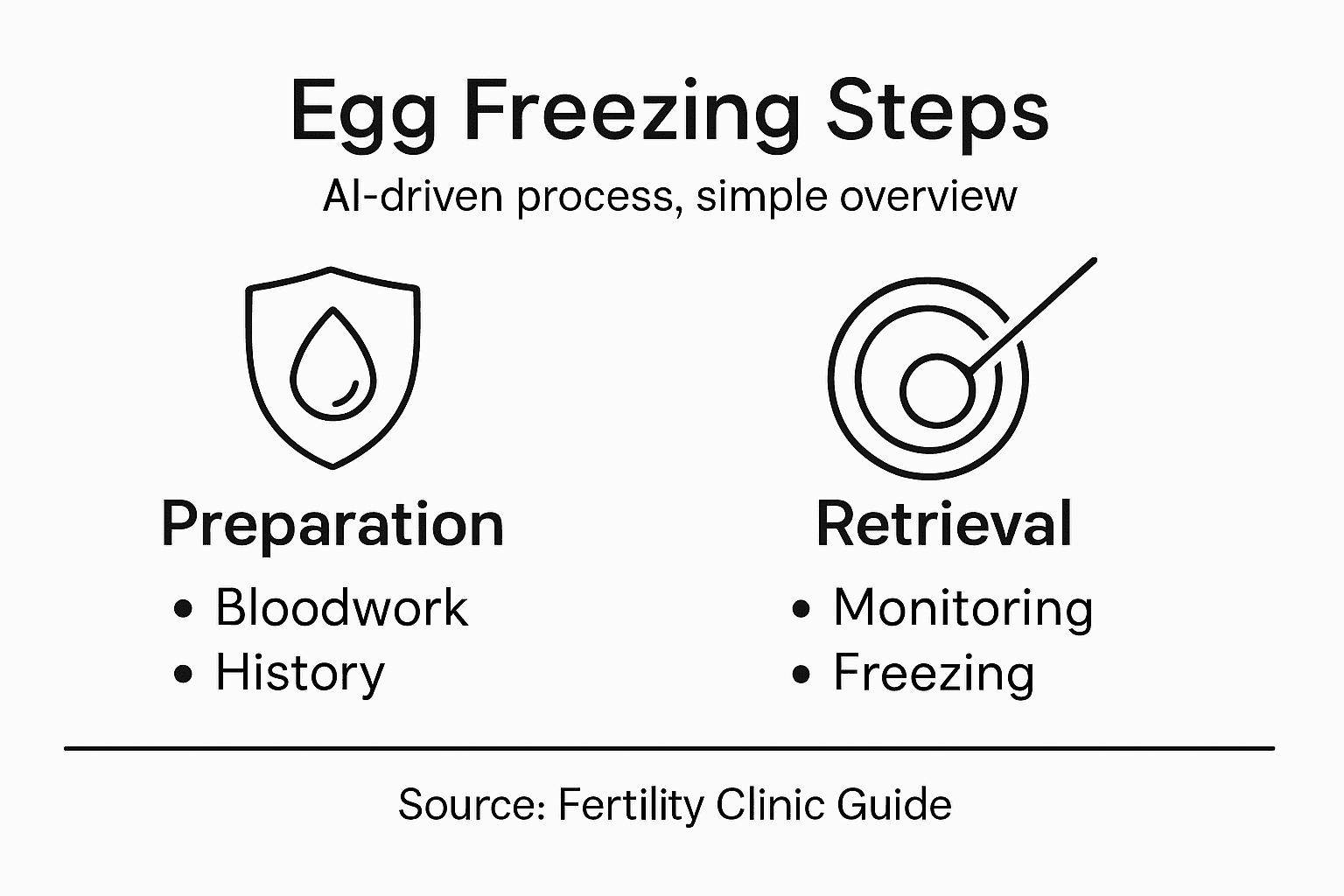
Ongoing support becomes your safety net and planning partner. Your clinic should provide regular communication about storage status, technology updates that might benefit your eggs, and counseling services whenever you’re ready to use them.
Many clinics now offer annual check-ins to review your frozen egg profile, discuss any new advancements that might improve future outcomes, and answer questions about timing for potential future use. This personalized fertility planning ensures you remain connected and informed.
Successful egg freezing verification combines concrete data about your frozen eggs with access to counseling and planning support that helps you make confident decisions about using them.
You’ll also receive information about storage renewal fees, typically annual costs for maintaining your eggs in secure cryogenic conditions. Budget for these expenses as part of your long-term fertility planning.
Most clinics provide 24/7 access to your frozen egg profile online, allowing you to review reports anytime. Some offer WhatsApp or messaging support for questions about your stored eggs and future planning options.
Pro tip: Create a secure digital folder storing all retrieval reports, viability predictions, storage confirmations, and clinic contact information in one accessible location—you’ll reference this documentation if you transfer to another clinic or plan future cycles.
Compare traditional and AI-driven egg freezing protocols:
Aspect | Traditional Approach | AI-Driven Approach |
Protocol Selection | Based on age and averages | Personal medical data analyzed |
Timing Decisions | Standardized schedules | Individualized timing optimization |
Success Prediction | General population stats | Personalized outcome forecasting |
Cycle Adjustments | Manual doctor review | Automated, data-driven updates |
Here is how AI enhances each stage of the egg freezing process:
Step | AI Role | Added Value |
Eligibility Assessment | Analyzes personal biomarkers and history | Customizes protocols, improves accuracy |
Preparation & Stimulation | Optimizes medication doses | Increases egg yield, minimizes risks |
Retrieval | Assesses eggs in real time | Informs freezing choices instantly |
Post-Freezing Support | Predicts future embryo viability | Sets expectations, aids planning |
Discover How AI-Powered Egg Freezing Can Change Your Fertility Journey
Egg freezing can feel overwhelming with so many decisions about timing, stimulation protocols, and egg quality assessments. This guide highlights the key challenges women face, such as uncertainty about eligibility, the stress of hormone injections, and concerns about egg viability after retrieval. If you want precise, personalized insights rather than guesswork, leveraging AI-driven fertility care is the way forward. At Aurea Fertility, we combine advanced AI algorithms with compassionate support to customize every step—from eligibility assessment to real-time egg quality monitoring—helping you feel confident and prepared throughout your egg freezing process.
Maximize your chances with tailored protocols that reduce unnecessary tests and speed up treatment from months to about two weeks. Ready to embrace a smarter, faster approach to egg freezing with expert guidance available 24/7? Take control of your reproductive future by connecting with Aurea Fertility’s innovative solutions. Learn more about how we integrate AI-assisted protocols and real-time embryo monitoring to transform your fertility journey. Visit us now at Aurea Fertility and start your personalized treatment plan today.
Frequently Asked Questions
What is the eligibility assessment for egg freezing?
AI-driven eligibility assessment evaluates your medical history, hormone levels, and individual profile to determine if egg freezing is right for you. Gather your recent blood work and reproductive history to ensure accurate predictions and personalized recommendations.
How long does the preparation phase for egg freezing take?
The preparation phase typically lasts 10-14 days and includes hormone testing, receiving an individualized stimulation protocol, and learning injection techniques. Follow your personalized protocol exactly to maximize egg yield and quality during this timeframe.
What can I expect on the day of egg retrieval?
On egg retrieval day, you’ll receive light sedation before undergoing a minimally invasive procedure to collect eggs from your ovaries. Prepare for mild cramping and discomfort afterward, and plan to rest for the remainder of the day to support recovery.
How do I verify the success of my frozen eggs?
After egg retrieval, you will receive a detailed report outlining the total number of eggs retrieved, their quality ratings, and viability predictions. Keep this documentation handy as it will guide you about future fertility options and planning.
What support is available after my eggs are frozen?
Following the freezing process, clinics offer ongoing support, which includes regular check-ins on the status of your frozen eggs and access to counseling services. Establish communication with your clinic to stay informed about advancements that could impact your frozen eggs and future treatment options.
How can I manage work commitments during the egg freezing process?
Many women find it helpful to plan their stimulation around their work schedules by communicating with their employer and utilizing flexible work arrangements. Take proactive steps to adjust your workload and use time management techniques to balance professional obligations with the demands of the egg freezing process.
Recommended


Comments