
Step by Step Embryo Freezing for Fast Fertility Success
- Feb 14
- 7 min read
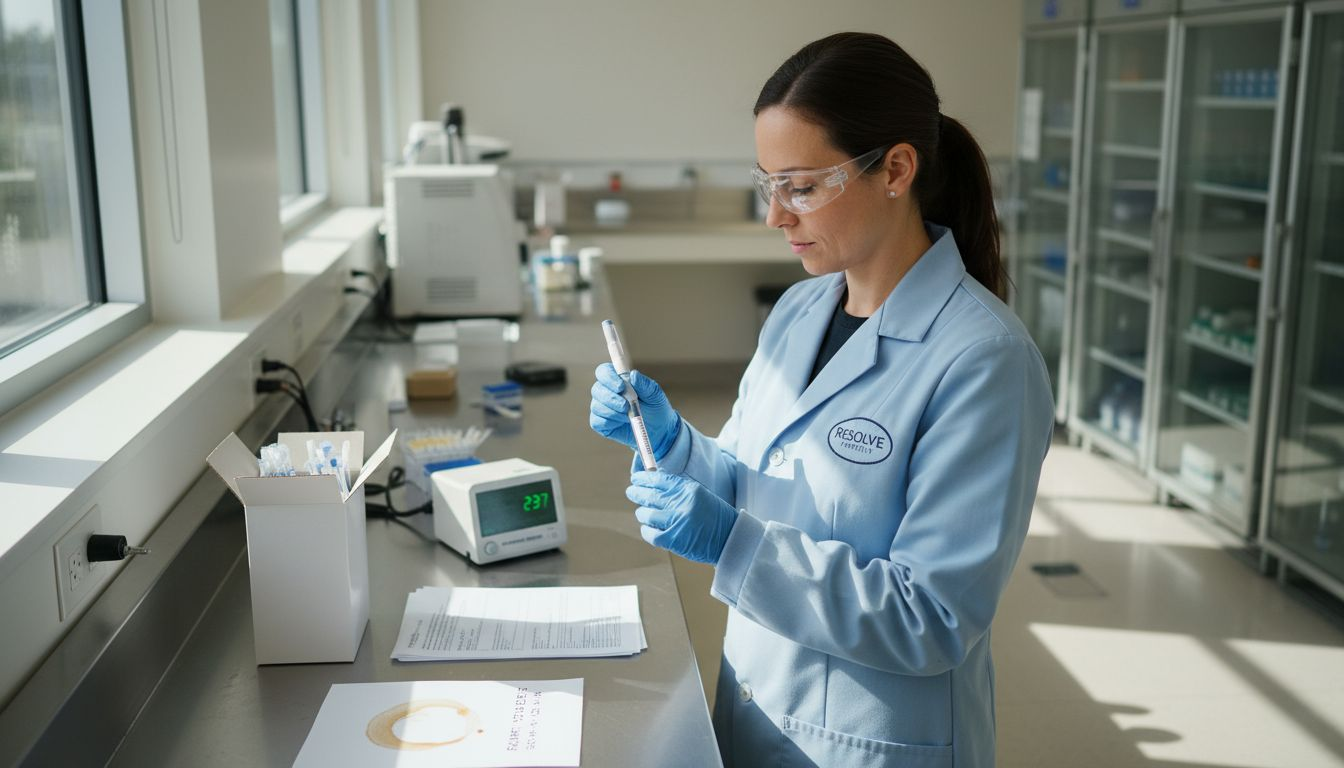
Finding timely answers about your fertility health can feel urgent when you want to plan ahead with confidence. Today, advanced artificial intelligence tools are reshaping the way women like you assess reproductive potential, offering rapid, individualized insights that drive smarter decisions. At a technology-driven clinic committed to affordable and efficient care, you can expect personalized embryo freezing solutions that use cutting-edge science to maximize your options and protect your future.
Table of Contents
Quick Summary
Key Message | Explanation |
1. AI enhances fertility assessments | AI tools provide personalized fertility evaluations based on hormonal, genetic, and age-related factors for accurate insights. |
2. Optimize ovarian stimulation for egg retrieval | Strategic hormone treatments maximize egg quantity and quality, personalized to individual responses, enhancing retrieval success. |
3. Use AI for precise embryo monitoring | AI technologies track embryo development in real-time, improving selection accuracy and implantation outcomes significantly. |
4. Advance embryo freezing with vitrification | Vitrification offers superior embryo preservation with high survival rates, ensuring greater future reproductive success. |
5. Ensure robust embryo storage protocols | Stringent quality checks and monitoring systems are crucial for maintaining the viability of cryopreserved embryos over time. |
Step 1: Assess fertility health with AI tools
Understanding your fertility health starts with leveraging cutting-edge artificial intelligence technologies that offer unprecedented insights into your reproductive potential. AI-powered tools now enable rapid, personalized fertility assessments that go far beyond traditional diagnostic methods, providing comprehensive evaluations tailored to your unique biological profile.
Modern AI systems analyze multiple complex factors to create a detailed fertility overview. These advanced screening technologies evaluate complex fertility biomarkers through sophisticated algorithms that can predict potential reproductive challenges with remarkable accuracy. Key assessment components include:
Hormonal profile analysis
Genetic risk factor screening
Age-related fertility potential mapping
Ovarian reserve estimation
Predictive reproductive health indicators
The diagnostic process typically involves providing comprehensive medical history, undergoing targeted blood tests, and completing an AI-guided questionnaire. These tools synthesize your data points rapidly, generating personalized insights that help you understand your fertility landscape with unprecedented precision.

Pro tip: Schedule your initial AI-powered fertility assessment during the early phase of your menstrual cycle for the most accurate baseline measurements.
Step 2: Stimulate ovaries and retrieve eggs efficiently
Successfully preparing your eggs for freezing requires strategic ovarian stimulation and precise egg retrieval techniques. This critical phase aims to maximize the number and quality of eggs available for potential future fertility treatments.
Controlled ovarian stimulation involves carefully administered hormone treatments designed to encourage multiple egg development. Ovarian stimulation protocols leverage gonadotropin hormones to mature several follicles simultaneously, significantly increasing your chances of retrieving multiple high-quality eggs. The typical process includes:
Initial hormone baseline testing
Personalized medication dosage determination
Daily hormone injections for 10-14 days
Regular ultrasound monitoring of follicle growth
Precise timing of egg retrieval procedure
Your fertility specialist will customize the stimulation approach based on your individual ovarian response, age, and medical history. Ultrasound and blood tests help track follicular development, ensuring optimal egg maturation and minimizing potential risks. The goal is to balance maximum egg production with your overall reproductive health.
Precise monitoring during ovarian stimulation can dramatically improve egg quality and retrieval success rates.
Pro tip: Maintain a consistent daily injection schedule and report any unusual symptoms immediately to your medical team to optimize your egg retrieval outcomes.
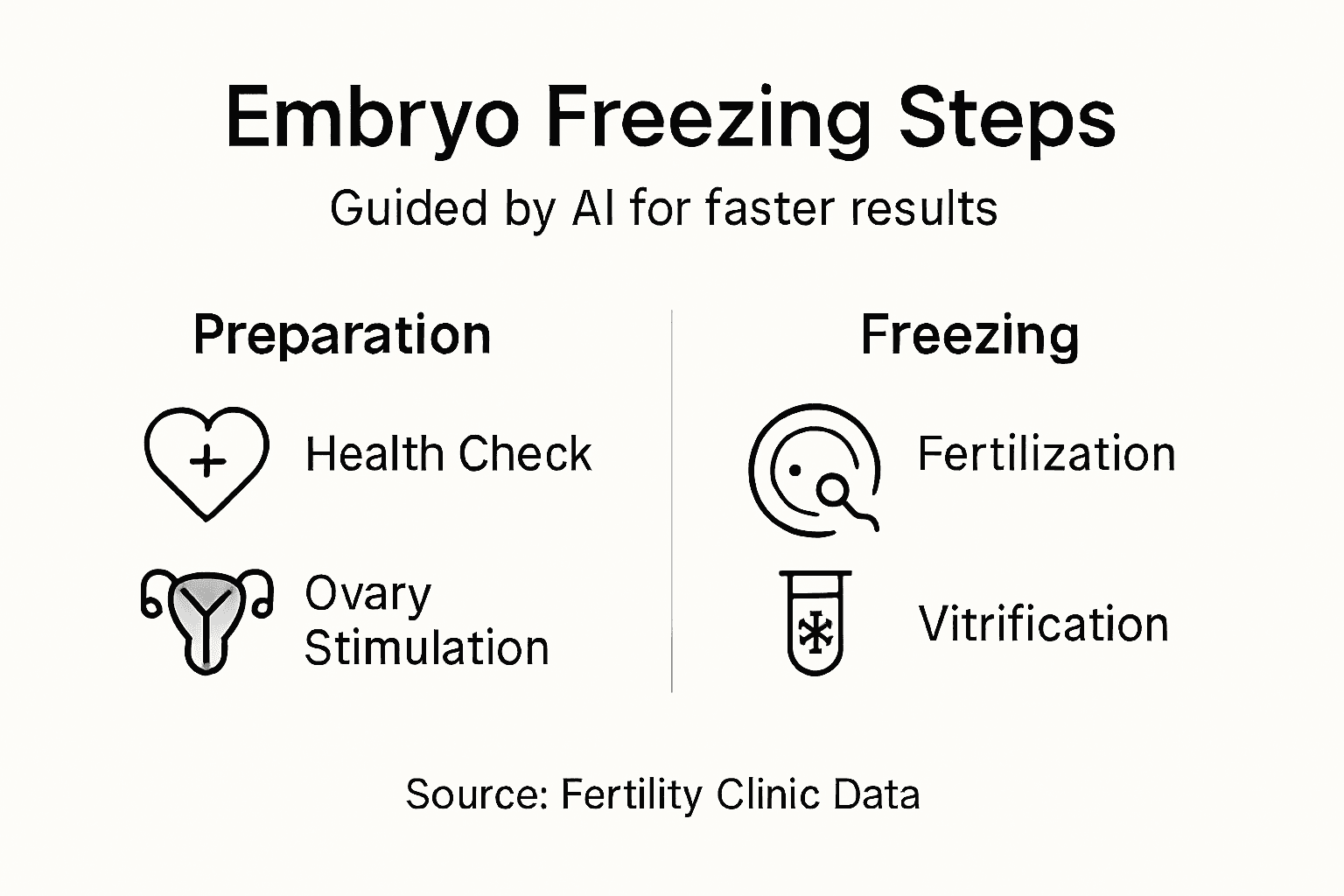
Step 3: Fertilize and monitor embryos using AI protocols
Transforming embryo development monitoring requires advanced artificial intelligence technologies that can predict and optimize fertilization outcomes with unprecedented precision. Your fertility journey now enters a critical phase where AI-powered analysis transforms traditional embryology techniques.
Convolutional neural networks revolutionize embryo selection by objectively evaluating developmental patterns and morphological features. The AI-assisted fertilization process involves several sophisticated steps:
Precise sperm selection using machine learning algorithms
Time-lapse imaging of embryo development
Continuous morphological feature tracking
Predictive analysis of embryo viability
Real-time developmental stage assessment
Your fertility specialists will use advanced imaging systems that capture microscopic details every few minutes, allowing AI algorithms to track critical developmental milestones. These intelligent systems can identify subtle indicators of embryo health that might be missed by traditional manual assessment, significantly improving your chances of successful implantation.
AI technologies can increase embryo selection accuracy by up to 30% compared to traditional methods.
Pro tip: Ask your fertility team about the specific AI technologies they use for embryo monitoring to understand how these advanced tools will optimize your fertility treatment.
Step 4: Freeze embryos with advanced vitrification methods
Advanced embryo preservation requires precision and cutting-edge technology to ensure your future fertility potential remains intact. Vitrification represents a groundbreaking approach to freezing embryos that dramatically improves survival and future pregnancy chances.
The vitrification process transforms traditional embryo freezing by rapidly cooling embryos in specialized cryoprotectant solutions. This innovative technique prevents destructive ice crystal formation, maintaining cellular integrity with remarkable efficiency. Key steps in the vitrification process include:
Carefully selecting high-quality embryos
Preparing specialized cryoprotectant solutions
Rapid cooling to ultra-low temperatures
Precise storage in liquid nitrogen containers
Systematic labeling and tracking
Your fertility specialists will meticulously monitor each stage, ensuring optimal conditions for long-term embryo preservation. The advanced technique offers exceptional survival rates, with 90-95% of embryos remaining viable after the freezing process, significantly improving your future reproductive options.
Compare traditional embryo freezing with advanced vitrification methods:
Freezing Method | Cooling Speed | Embryo Survival Rate | Future Pregnancy Potential |
Traditional Slow Freezing | Gradual | 60-70% viable embryos | Moderate success |
Vitrification | Rapid | 90-95% viable embryos | High success, reduced cell damage |
Vitrification technology has revolutionized embryo preservation, offering unprecedented success rates and hope for future fertility.
Pro tip: Request a detailed explanation of the specific vitrification protocols used by your fertility center to understand the advanced technologies protecting your embryos.
Step 5: Verify embryo quality and ensure secure storage
Ensuring the safety and viability of your cryopreserved embryos requires meticulous quality verification and advanced storage protocols. This critical stage determines the long-term potential of your fertility preservation strategy, where precise monitoring and expert handling become paramount.
Cryostorage quality management involves comprehensive procedures that safeguard your embryos through multiple layers of protection. Your fertility center will implement rigorous verification processes to guarantee optimal embryo preservation:
Comprehensive embryo grading assessments
Detailed genetic and morphological screening
Precise documentation and tracking systems
Continuous liquid nitrogen level monitoring
Regular viability and integrity checks
Research indicates that prolonged storage requires strategic management. Your medical team will strategically plan embryo storage duration, understanding that extended preservation might subtly impact future reproductive outcomes. They will provide personalized guidance on optimal timing and usage of your cryopreserved embryos.
Proper embryo storage is not just a technical process, but a critical bridge to your future fertility potential.
Pro tip: Request a comprehensive storage protocol documentation and understand the specific tracking mechanisms used to monitor your embryos during long-term cryopreservation.
Here’s a summary of how AI enhances each key stage of modern fertility treatment:
Stage of Fertility Process | AI Impact | Business or Clinical Benefit |
Initial Fertility Assessment | Personalized data-driven analysis | Faster, more accurate risk detection |
Embryo Selection | Objective viability prediction | Increased implantation success rates |
Embryo Monitoring | Continuous morphological tracking | Early detection of developmental issues |
Quality Verification | Automated grading and tracking | Improved embryo survival and reliable storage |
Accelerate Your Fertility Journey with AI-Powered Embryo Freezing at Aurea Fertility
Embarking on the embryo freezing process can feel complex and overwhelming. The article highlights key challenges such as ensuring precise ovarian stimulation, accurate embryo monitoring using AI protocols, and securing long-term embryo viability with advanced vitrification methods. If you are seeking a faster, personalized path to fertility preservation that respects your time and emotions this detailed approach is crucial. At Aurea Fertility, we understand the importance of minimizing stress while maximizing success by integrating powerful AI technologies that enhance every step—from rapid fertility assessments to real-time embryo viability tracking.
Our streamlined treatment pathways reduce typical timelines from months to just around two weeks with patient-centric care built on AI-assisted egg freezing, embryo scoring, and seamless communication. Discover how Aurea Fertility combines cutting-edge science with compassionate support for women and couples who want efficient, affordable solutions without compromise. Start your journey now by exploring Aurea Fertility’s advanced services. Learn more about how our innovative protocols can help you make confident fertility decisions today and take the next step toward securing your future.
Frequently Asked Questions
What is the process of embryo freezing for fertility success?
The embryo freezing process involves several key steps: assessing embryo quality, using advanced vitrification methods, and ensuring secure storage. Start by consulting with your fertility specialist to understand the detailed steps tailored to your needs.
How does AI improve embryo freezing techniques?
AI enhances embryo freezing by providing precise monitoring and grading of embryos, which helps in selecting the healthiest ones for preservation. Request a demonstration of how AI is applied in your fertility center to ensure the highest success rates for embryo viability.
What should I know about the vitrification method for freezing embryos?
Vitrification is a rapid freezing technique that protects embryos from ice crystal formation, with survival rates ranging from 90-95%. Speak with your fertility team about their specific vitrification protocols to ensure your embryos are preserved effectively.
How do I verify the quality of my frozen embryos?
Quality verification involves comprehensive grading assessments and genetic screenings for the embryos before freezing. Ask your medical team for details on their embryo quality assessment procedures to better understand how they ensure optimal preservation.
When is the best time to freeze embryos during my fertility treatment?
The best time to freeze embryos is after successful fertilization and optimal embryo development, usually monitored closely during your treatment cycle. Coordinate with your fertility specialist to determine the exact timing in your specific treatment plan.
What are the long-term storage options for cryopreserved embryos?
Cryopreserved embryos can be stored for several years with appropriate monitoring, providing flexibility for future use. Inquire about your fertility center’s storage capabilities and protocols to ensure the safe handling of your embryos over time.
Recommended
Comments