
Role of Embryo Monitoring in Fast-Track Fertility

Every fertility journey brings moments of hope mixed with uncertainty, especially when time feels precious and every decision matters. For women under 40 with strong ovarian reserve, the desire for rapid answers and reliable results is deeply personal. AI-enhanced embryo monitoring now gives you and your specialist access to precise, data-driven insights that support smarter embryo selection and reduce stressful guesswork. Discover how modern technologies create new possibilities for faster, more confident progress toward your family goals.
Table of Contents
Key Takeaways
Point | Details |
Embryo Monitoring Enhances IVF | Advanced monitoring technologies significantly improve IVF success rates through precise embryo selection. |
AI Transforms Assessment | Artificial intelligence enhances embryo evaluation accuracy and reduces subjective bias in selection processes. |
Ethical Considerations Matter | Navigating ethical implications, including consent and genetic privacy, is essential in embryo monitoring practices. |
Consultations are Essential | Engaging in detailed discussions with fertility specialists about monitoring technologies can optimize reproductive outcomes. |
Defining Embryo Monitoring and Core Principles
Embryology represents a critical frontier in reproductive medicine, where advanced technologies enable unprecedented insights into early human development. Embryo monitoring is a sophisticated process that allows fertility specialists to track and assess embryo development with remarkable precision, providing critical information about potential implantation success.
At its core, embryo monitoring involves systematic observation and evaluation of embryos during critical developmental stages. This process utilizes advanced imaging technologies to capture detailed visual and metabolic data about embryonic growth. The key objectives of embryo monitoring include:
Tracking cellular division rates and patterns
Assessing embryo morphological characteristics
Identifying potential genetic or developmental anomalies
Selecting the most viable embryos for potential transfer
The fundamental principles underlying embryo monitoring are grounded in both scientific and ethical considerations of embryo research. These principles demand rigorous protocols that balance technological capabilities with respect for human embryonic potential.
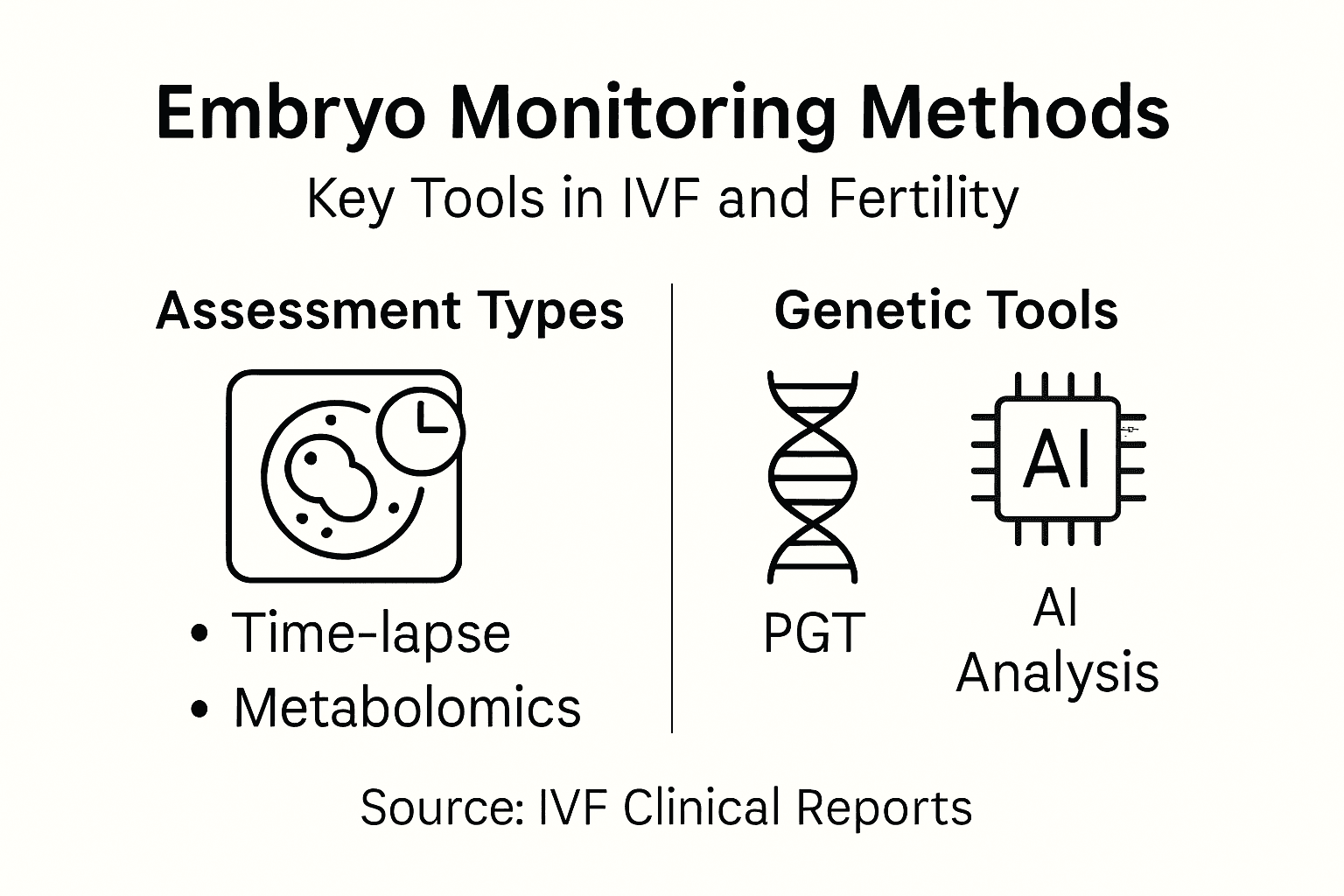
Modern embryo monitoring integrates multiple assessment techniques, including time-lapse imaging, genetic screening, and metabolic profiling. By capturing detailed developmental trajectories, specialists can make more informed decisions about embryo selection and potential reproductive interventions.
Ethical standards play a paramount role in defining acceptable monitoring practices. Researchers and clinicians must navigate complex moral landscapes, ensuring that embryo evaluation remains scientifically robust while maintaining fundamental human dignity.
Pro tip: Request a comprehensive consultation with your fertility specialist to understand how specific embryo monitoring techniques might apply to your unique reproductive journey.
Key Types of Embryo Monitoring Technologies
Embryology has witnessed remarkable technological advancements that have transformed how specialists evaluate embryo development and potential. Embryo monitoring technologies represent sophisticated diagnostic approaches designed to provide unprecedented insights into early human reproductive processes.
The primary embryo monitoring technologies currently used in reproductive medicine include:
Morphological Assessment: Traditional visual evaluation of embryo structure and development
Time-Lapse Monitoring (TLM): Continuous imaging capturing detailed cellular division patterns
Metabolomic Analysis: Advanced techniques measuring metabolic indicators of embryo health
Genetic Screening: Comprehensive genetic profiling to identify potential developmental anomalies
Time-lapse imaging technologies have emerged as a particularly powerful tool in modern embryology. These systems provide dynamic, continuous visual tracking of embryonic development, allowing specialists to observe cellular behaviors with remarkable precision. By capturing images at frequent intervals, time-lapse monitoring enables unprecedented detailed analysis of embryo progression.

Metabolomic techniques represent another cutting-edge approach in embryo monitoring. These methods involve analyzing metabolic signatures that can provide critical insights into embryo viability and potential developmental success. Researchers can now detect subtle metabolic variations that might indicate an embryo’s reproductive potential far more accurately than traditional assessment methods.
Genetic screening technologies have also revolutionized embryo monitoring, enabling comprehensive genetic profiling that helps identify potential chromosomal abnormalities or genetic risks. These advanced screening techniques allow fertility specialists to select the most promising embryos with significantly higher accuracy.
Here’s a side-by-side comparison of embryo monitoring technologies and their unique advantages:
Technology | Core Purpose | Unique Advantage | Main Limitation |
Morphological Assessment | Visual inspection of embryos | Simple and widely accessible | Limited predictive accuracy |
Time-Lapse Monitoring | Continuous developmental imaging | Captures subtle cell dynamics | Higher equipment cost |
Metabolomic Analysis | Measures metabolic health | Detects viability via metabolism | Requires specialized training |
Genetic Screening | Genetic profiling of embryos | Identifies chromosomal anomalies | Raises privacy and ethical issues |
Pro tip: Discuss multiple monitoring technology options with your fertility specialist to understand which combination might provide the most comprehensive assessment for your specific reproductive goals.
How AI Enhances Embryo Assessment
Artificial Intelligence has emerged as a groundbreaking technology in reproductive medicine, fundamentally transforming embryo assessment with unprecedented precision and objectivity. Artificial intelligence brings sophisticated analytical capabilities that significantly improve the accuracy and reliability of embryo evaluation processes.
The key areas where AI enhances embryo assessment include:
Image Analysis: Rapid and precise morphological evaluation
Predictive Modeling: Accurately forecasting embryo development potential
Pattern Recognition: Identifying subtle developmental indicators
Objective Scoring: Minimizing human bias in embryo selection
Deep learning applications in embryo assessment have revolutionized how fertility specialists analyze complex embryonic data. These advanced algorithms can process thousands of image datasets, detecting microscopic details and developmental patterns that might escape human observation. By training on extensive historical datasets, AI systems can predict embryo quality and implantation potential with remarkable accuracy.
AI’s computational power allows for comprehensive multiparameter analysis that traditional methods cannot achieve. Machine learning algorithms can simultaneously evaluate multiple embryo characteristics, including cellular division rates, morphological symmetry, and metabolic indicators. This holistic approach provides a more nuanced and comprehensive assessment of embryo viability.
Moreover, AI significantly reduces subjective interpretation in embryo evaluation. By establishing standardized assessment protocols based on vast datasets, these technologies minimize human error and provide consistent, reproducible results. Fertility specialists can now leverage these intelligent systems to make more informed decisions about embryo selection and potential reproductive strategies.
This summary highlights how artificial intelligence transforms embryo selection in IVF:
AI Feature | Impact on IVF Outcomes | Added Value for Patients |
Image Analysis | Improved morphology scoring | Reduces subjective evaluation |
Predictive Modeling | Accurate viability forecasts | Better embryo selection decisions |
Pattern Recognition | Detects subtle development | Early risk identification |
Objective Scoring | Standardizes assessments | Fairer, more consistent results |
Pro tip: Request detailed information about the AI technologies and machine learning algorithms used in your specific fertility clinic to understand how they might optimize your reproductive outcomes.
Embryo Monitoring’s Impact on IVF Success Rates
Embryology represents a complex journey where advanced monitoring technologies can dramatically transform reproductive outcomes. Embryo monitoring has emerged as a critical factor in significantly improving in vitro fertilization (IVF) success rates, offering unprecedented insights into early developmental potential.
Key improvements in IVF success rates through embryo monitoring include:
Enhanced Predictive Accuracy: Identifying most viable embryos with greater precision
Reduced Implantation Failures: Minimizing unsuccessful transfer attempts
Personalized Treatment Strategies: Tailoring interventions based on detailed embryo assessments
Early Anomaly Detection: Identifying potential developmental challenges
Systematic analysis of AI-based embryo monitoring reveals remarkable improvements in clinical outcomes. These advanced technologies provide pooled sensitivity metrics demonstrating superior predictive capabilities compared to traditional assessment methods. By analyzing thousands of embryonic development parameters, monitoring technologies can now forecast implantation potential with unprecedented accuracy.
The scientific community has consistently demonstrated that comprehensive embryo monitoring directly correlates with higher live birth rates. Advanced imaging and artificial intelligence technologies enable fertility specialists to evaluate embryo quality through multiple sophisticated lenses, including cellular symmetry, division rates, and metabolic indicators.
Moreover, these monitoring technologies significantly reduce subjective interpretation. By establishing standardized, data-driven assessment protocols, fertility clinics can minimize human error and provide more consistent, reproducible results. This technological approach transforms embryo selection from an art into a precise, science-driven process.
Pro tip: Request a detailed consultation about your clinic’s specific embryo monitoring technologies to understand how they might optimize your individual reproductive chances.
Risks, Limitations, and Ethical Considerations
Advanced embryo monitoring technologies represent a complex landscape of scientific potential and ethical responsibility. Embryo research demands a nuanced approach that carefully balances technological innovation with fundamental human values and potential reproductive risks.
Key ethical considerations and potential limitations include:
Patient Consent: Ensuring full transparency about technological interventions
Genetic Privacy: Protecting sensitive genetic information
Embryo Status: Defining ethical boundaries of embryo manipulation
Technological Uncertainty: Managing expectations about predictive capabilities
Ethical concerns surrounding embryo selection technologies reveal profound moral complexities inherent in reproductive medicine. These technologies challenge traditional understanding of embryonic integrity, requiring sophisticated legal and ethical frameworks that protect both scientific progress and human dignity.
Technological limitations present significant challenges in embryo monitoring. While advanced algorithms offer unprecedented insights, they cannot guarantee absolute predictive accuracy. Fertility specialists must communicate that these technologies provide probabilities, not guarantees, and patients should maintain realistic expectations about potential reproductive outcomes.
Moreover, genetic screening and AI-driven embryo assessment raise critical questions about potential discriminatory practices. There are legitimate concerns about inadvertently creating selection mechanisms that might compromise genetic diversity or unintentionally reinforce societal biases through technological intervention. Responsible implementation requires continuous ethical review and transparent decision-making processes.
Pro tip: Request a comprehensive discussion about potential risks and ethical considerations with your fertility specialist before proceeding with advanced embryo monitoring technologies.
Accelerate Your Fertility Journey with Advanced Embryo Monitoring at Aurea Fertility
Struggling with the uncertainty of embryo viability or facing long wait times can be emotionally and financially draining. The article highlights how precise embryo monitoring combined with artificial intelligence dramatically improves embryo selection accuracy and IVF success rates. At Aurea Fertility, we confront these challenges head-on by integrating cutting-edge AI-driven embryo assessment technologies into fast-track fertility treatments. Our approach reduces typical treatment times from several months to about two weeks so you can move confidently and quickly toward your goal of parenthood.
Experience the power of personalized, data-driven embryo monitoring that enhances predictive accuracy while minimizing unnecessary procedures. With continuous support and 24/7 patient communication, Aurea Fertility makes your fertility care efficient and compassionate. Don’t let delays or uncertainty stall your dreams. Learn how our innovative protocols optimize embryo selection and IVF outcomes by visiting Aurea Fertility today. Discover more about how AI-assisted embryo scoring and reproductive decision-making can transform your fertility journey by checking our AI-Driven Fertility Solutions and embracing a tailored treatment plan designed specifically for you.
Frequently Asked Questions
What is embryo monitoring and how does it work?
Embryo monitoring is a process used in reproductive medicine to systematically observe and assess embryos during critical developmental stages using advanced imaging technologies. It captures detailed visual and metabolic data about embryonic growth, helping specialists track cellular division, assess morphology, and identify any anomalies.
How does embryo monitoring improve IVF success rates?
Embryo monitoring enhances IVF success rates by providing better predictive accuracy in identifying viable embryos, reducing implantation failures, and allowing for personalized treatment strategies based on detailed assessments. This scientific approach significantly increases the chances of a successful pregnancy.
What are the main technologies used in embryo monitoring?
The primary technologies used in embryo monitoring include morphological assessment, time-lapse monitoring (TLM), metabolomic analysis, and genetic screening. Each technology offers unique advantages, such as detailed imaging, metabolic health indicators, and detecting genetic anomalies.
What ethical considerations are associated with embryo monitoring?
Ethical considerations in embryo monitoring include ensuring patient consent, protecting genetic privacy, defining embryo status, and the potential for technological uncertainty. It’s vital for fertility specialists to navigate these complex moral landscapes to maintain respect for human dignity while advancing scientific knowledge.
Recommended


Comments