
Minimizing Fertility Treatment Risks With AI Precision

Conflicting advice can make fertility treatment decisions feel overwhelming when you want answers that truly fit your unique health profile. For women under 40 with strong ovarian reserves, separating genuine risks from misconceptions means more than just scanning social media stories. Infertility affects millions worldwide, and while medical concerns like ovarian hyperstimulation syndrome are real, the latest protocols and AI-driven care can lower complication rates and ease emotional stress. This guide clarifies what matters most for rapid, personalized treatment worth your trust and investment.
Table of Contents
Key Takeaways
Point | Details |
Understanding Risks | Fertility treatments involve various risks; however, many misconceptions exaggerate these dangers. A realistic perspective can help guide informed decisions. |
Personalized Treatment | AI-driven protocols are transforming fertility treatment by tailoring care to individual responses, reducing risks and improving outcomes. |
Emotional and Financial Factors | Emotional stress and financial strain are significant factors in fertility treatment that can impact overall well-being and decision-making. |
Informed Consent | Genuine informed consent involves understanding the specific risks and success rates associated with treatment options relevant to your personal profile. |
Fertility Treatment Risks—Key Facts And Misconceptions
When you’re considering fertility treatment, you’ll encounter a minefield of conflicting information. Some claims sound reassuring; others feel unnecessarily alarming. The reality sits somewhere between the hype and the fear, but getting there requires separating actual medical facts from widespread misconceptions that persist even among educated women. Infertility affects millions worldwide and comes from diverse causes, yet many women underestimate both the complexity of their situation and the realistic outcomes of different treatment approaches. Understanding what risks are genuine versus what’s merely folklore can help you make decisions based on evidence rather than anxiety.
One of the most persistent misconceptions is that fertility treatments carry extremely high health risks that outweigh the benefits. While legitimate side effects exist, modern protocols have become increasingly refined. Ovarian hyperstimulation syndrome (OHSS) remains the most serious acute risk, but severe cases occur in roughly 1-2% of IVF cycles. Emotional and physical stress are real concerns, yet many women exaggerate these in their minds before starting treatment. Another common myth suggests that young adults significantly underestimate risks associated with fertility treatments and delayed childbearing, leading to uninformed postponement decisions. Additionally, some women believe that age impacts fertility risk more dramatically than it actually does at younger ages, while others dismiss male fertility factors entirely, which accounts for roughly 40-50% of infertility cases. The truth: your age matters, but women under 40 with good ovarian reserves typically face lower complication rates than older populations.
Another area heavy with misconceptions involves treatment timeline and success rates. Many women believe IVF automatically succeeds in one or two attempts or fails completely. Reality is messier. Success depends on egg quality, sperm quality, embryo development, and uterine receptivity. By using AI precision in embryo selection and monitoring, clinics can now identify your highest-potential embryos more accurately, reducing unnecessary transfers and improving per-cycle outcomes. This doesn’t guarantee success, but it shifts odds meaningfully in your favor. Women also frequently assume that frozen eggs are inferior to fresh ones (they’re not, when properly frozen), or that all clinics use the same technology (they absolutely don’t). The path forward requires distinguishing between what sounds frightening and what actually poses medical risk in your specific situation.
Pro tip: Request your clinic’s specific data on OHSS rates, pregnancy outcomes for your age group, and whether they use AI-assisted embryo grading—comparing these real numbers between clinics reveals which ones prioritize both safety and your success.
Types Of Risks Associated With Treatment Cycles
Fertility treatment cycles don’t carry just one type of risk. Instead, they present a spectrum of complications that vary depending on your specific treatment protocol, age, and health profile. Understanding what each risk actually means helps you separate real concerns from theoretical possibilities. Multiple risks including ovarian hyperstimulation syndrome and procedural complications require different management strategies, and your clinic should tailor risk mitigation to your individual situation rather than applying blanket protocols to everyone. The good news is that modern fertility medicine has developed sophisticated ways to monitor and minimize most of these risks, especially when clinics use advanced technologies to personalize your treatment plan.
Ovarian Hyperstimulation Syndrome (OHSS)
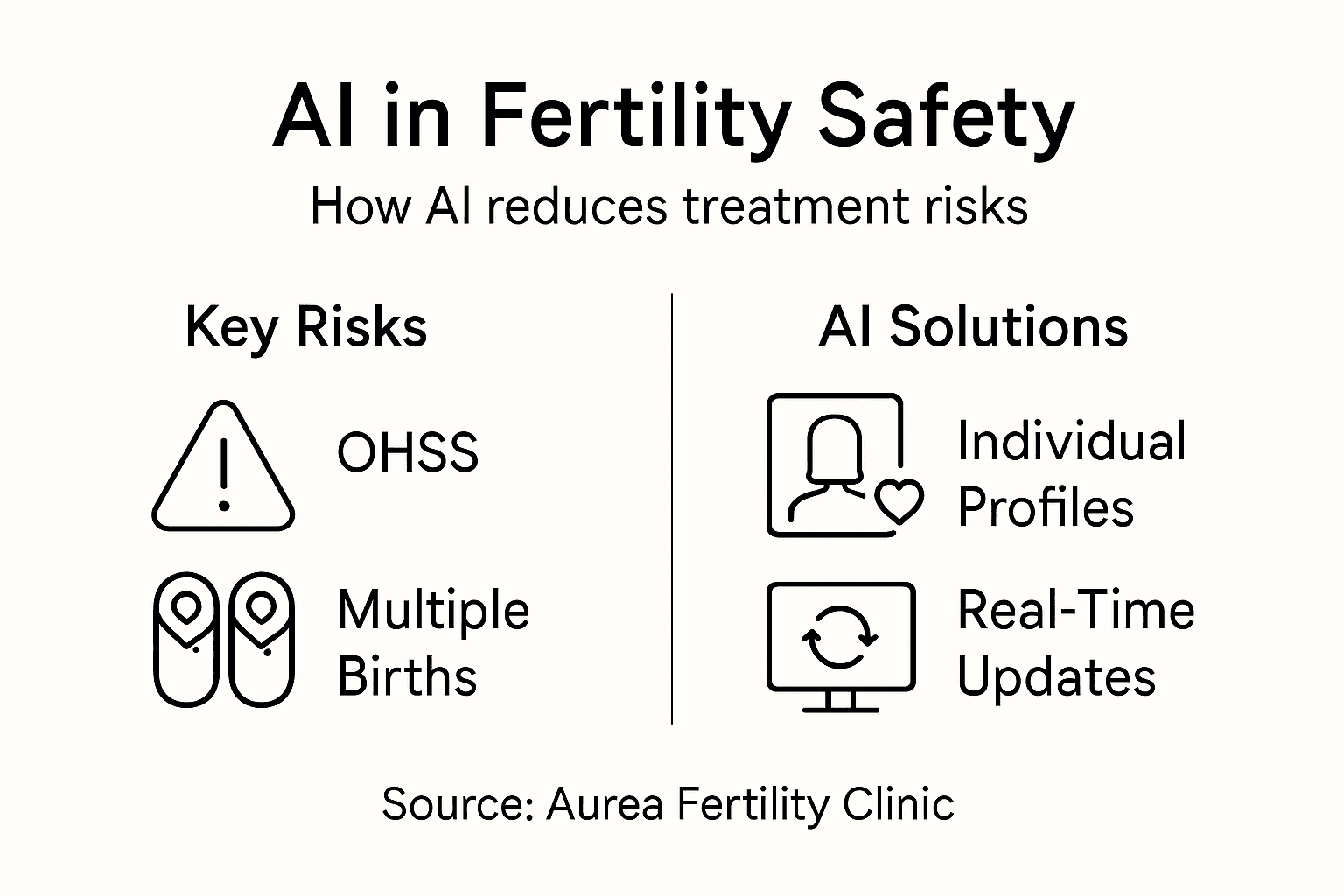
OHSS remains the most significant acute risk during fertility cycles, but understanding its severity spectrum changes how you should approach it. Mild OHSS causes bloating, mild abdominal pain, and nausea that resolve within days. Moderate OHSS involves more pronounced symptoms and may require monitoring but typically resolves without intervention. Severe OHSS, where fluid accumulates in your abdomen and lungs, occurs in less than 1-2% of cycles and requires hospitalization in rare cases. The risk increases with stimulation protocols using higher hormone doses and in women with polycystic ovary syndrome (PCOS). This is where personalization matters enormously. AI-driven protocols can predict your individual response to stimulation by analyzing your hormone patterns and ovarian reserve characteristics, allowing clinics to adjust medication doses in real-time rather than following standard dosing. This precision approach reduces both OHSS risk and the emotional toll of unnecessary appointments.

Multiple Pregnancies and Procedural Risks
Another category worth understanding involves multiple births and long-term health outcome data from thousands of cycles. Multiple pregnancies (twins or higher-order multiples) carry increased risks for both you and developing babies, including gestational diabetes, preeclampsia, and premature birth. However, single-embryo transfer, which is increasingly standard practice, significantly reduces this risk. Procedural risks during egg retrieval include infection, bleeding, and bowel or blood vessel injury, though these remain uncommon (under 0.5% overall). Miscarriage rates vary by age and embryo quality, with women under 35 experiencing roughly 10-15% miscarriage rates even with chromosomally normal embryos. This is where embryo selection becomes critical. Clinics using AI-assisted embryo grading can identify which embryos carry the highest chromosomal abnormality risk, allowing you to focus transfers on your best candidates and reducing the miscarriage risk substantially.
Long-Term Health Considerations
Some women worry about long-term cancer risk or other delayed health effects from fertility hormones. Current evidence shows no increased cancer risk from fertility treatment, though ongoing research continues in this area. Psychological stress and emotional burden during treatment cycles represent real risks that shouldn’t be minimized. Rapid treatment pathways that reduce your time in active treatment cycles (from months to weeks) may actually decrease cumulative emotional strain. The combination of shorter timelines and clearer communication about realistic outcomes helps you maintain perspective throughout treatment.
Pro tip: Ask your clinic specifically how they personalize stimulation protocols to your ovarian response and whether they use real-time hormone monitoring to adjust doses, as this directly impacts your OHSS risk and treatment comfort.
Below is a quick reference of common fertility treatment risks and the main factors that influence them:
Risk Type | Main Influencing Factors | Risk Reduction Strategy |
OHSS | Hormone dose, PCOS, age | Personalized medication, real-time monitoring |
Multiple Births | Embryo number transferred | Single-embryo transfer standard |
Emotional Stress | Treatment length, uncertainty | Shorter, transparent protocols |
Financial Strain | Number of cycles, add-on tests | Fewer failed cycles, avoid unnecessary procedures |
Personalized AI Solutions For Reduced Risks
The shift from one-size-fits-all fertility protocols to AI-driven personalization represents a genuine transformation in how clinics approach your care. Rather than following standardized hormone dosing schedules that worked reasonably well for average patients, modern clinics now use machine learning algorithms to predict your individual response to stimulation based on your specific ovarian reserve, age, hormone levels, and medical history. This isn’t theoretical. Personalized treatment plans that minimize risks through predictive analytics and real-time monitoring directly reduce your chance of complications while improving your cycle outcomes. The fundamental advantage is that your protocol adjusts to how your body actually responds rather than expecting your body to fit into a predetermined plan. If your hormones indicate you’re responding more aggressively than expected, your medication doses decrease before you reach dangerous OHSS territory. If you’re responding slowly, doses increase to optimize follicle development without wasting time.
How AI Analyzes Your Individual Risk Profile
When you start treatment at a clinic using AI risk stratification, your data tells a story that algorithms can read far more comprehensively than traditional clinical assessment alone. The system integrates your age, AMH levels, antral follicle count, body mass index, and any previous cycle responses to create a risk prediction model specific to you. This model estimates your likelihood of OHSS, poor response, multiple pregnancy complications, and other treatment-related risks. AI-driven decision support assists clinicians in balancing treatment effectiveness against potential harms and tailoring protocols to individual biological responses, meaning your doctor receives concrete recommendations based on your actual risk factors rather than relying solely on experience and intuition. A woman with PCOS might see a recommended protocol that emphasizes lower starting doses with more gradual increases. A woman with diminished ovarian reserve might see recommendations for specific timing and medication combinations that historically produced better results in her demographic. This customization happens before you even inject the first medication.
Real-Time Adjustment and Embryo Selection
Personalization continues throughout your cycle through real-time monitoring. Traditional clinics perform ultrasounds and blood work on fixed schedules. AI-integrated clinics use algorithms that analyze your response patterns and recommend individualized monitoring frequencies. If your follicles are developing unusually fast or your estrogen is rising in an unexpected pattern, your next appointment comes sooner. If your response looks textbook, you might extend the interval slightly, reducing unnecessary office visits and stress. When it comes time to select which embryo to transfer, AI embryo grading systems analyze thousands of morphological parameters invisible to the human eye, identifying which embryos carry the highest chromosomal normality probability. This eliminates transferring embryos with high abnormality likelihood, directly reducing miscarriage risk and improving the odds of successful pregnancy from your first transfer. The combination of personalized stimulation protocols, real-time adjustments, and AI-assisted embryo selection creates a compounding benefit. You experience fewer side effects, fewer unnecessary procedures, and higher success rates per cycle.
The Cost and Timeline Advantage
Personalized AI protocols also accelerate your path to pregnancy, which has meaningful psychological and financial benefits. Traditional clinics often require multiple baseline appointments, bloodwork, and imaging before finalizing your protocol. Because AI can work with your existing data and historical patterns from first contact, treatment often begins within days rather than weeks. Your shorter overall treatment timeline means fewer appointments, reduced medication costs, and critically, less emotional exposure to the daily stress of active treatment. This isn’t a trivial benefit for women managing jobs, relationships, and life while pursuing fertility care.
Here is a summary comparing traditional and AI-personalized fertility treatment protocols:
Aspect | Traditional Protocols | AI-Personalized Protocols |
Medication Dosing | Follows standard schedules | Adjusts in real-time per patient |
Risk Management | Generic monitoring for all | Individual risk prediction models |
Treatment Timeline | Multiple appointments, slower | Fewer visits, faster cycle initiation |
Success Rate Impact | Relies on physician experience | Data-driven embryo selection improves odds |
Pro tip: Before starting treatment, ask your clinic whether they use AI to predict your individual response to stimulation and whether your protocol will adjust in real-time based on your actual hormone levels and ultrasound findings, as these specifics determine how much risk reduction you’ll actually experience.
Rapid Protocols And Their Impact On Safety
Speed in fertility treatment sounds appealing until you worry it might mean cutting corners on safety. The reality is more nuanced. Rapid protocols that compress traditional timelines from several months to two weeks don’t inherently compromise your safety if they’re designed intelligently with your risk profile in mind. The distinction matters enormously. Accelerated protocols can reduce treatment burden while careful evaluation of safety for patients is essential, which means the protocol’s safety depends entirely on how it’s implemented. A clinic rushing through appointments without proper monitoring creates genuine risk. A clinic using AI to identify which patients can safely tolerate rapid advancement while maintaining rigorous oversight creates a different picture entirely. The speed comes from eliminating unnecessary waiting periods and redundant testing, not from skipping critical safety steps.
How Rapid Protocols Actually Work
Traditional fertility cycles follow relatively standardized timelines with multiple baseline appointments before stimulation even begins. You might wait a week for your period, another week for baseline ultrasound and bloodwork, then wait for protocol assignment before starting medications. By the time you’re actually stimulating, weeks have passed. Rapid protocols compress this by conducting your baseline evaluation immediately upon starting your cycle and beginning stimulation within days rather than weeks. This works because your key information (AMH, age, antral follicle count, previous cycle responses if applicable) doesn’t change significantly between day one and day five of your cycle. What changes is the clinic’s efficiency in gathering and analyzing that data. AI systems accelerate this further by predicting your response based on your data profile and recommending your personalized protocol instantly rather than waiting for physician review over multiple days. The time savings accumulate throughout the cycle because your monitoring frequency adjusts based on algorithmic prediction rather than following a fixed schedule. If your response looks predictable, you might have fewer ultrasounds. If your response pattern suggests potential complications, your monitoring intensifies. This responsiveness actually increases safety by catching unusual patterns earlier.
The Safety Question: Psychological Versus Physical Risk
The most interesting aspect of rapid protocols involves psychological safety, which research hasn’t traditionally emphasized but matters significantly. Aggressive stimulation approaches may increase risks such as ovarian hyperstimulation or adverse psychological effects, and ongoing analysis helps guide safer rapid protocol implementations. A woman spending four months in active treatment cycles experiences cumulative emotional exhaustion. Each negative result resets the emotional baseline lower. Each appointment triggers anticipatory anxiety. By condensing the active treatment phase to two weeks, you reduce this cumulative burden substantially. Your emotional reserves stay higher because you’re not cycling through months of hope, waiting, and disappointment. This isn’t trivial. Psychological stress itself increases miscarriage risk and impairs your overall health. A faster timeline that keeps you psychologically resilient actually supports safety in ways that extend beyond what blood tests measure. However, this only works if the rapid protocol doesn’t compromise your physical safety through inadequate monitoring or aggressive stimulation that your body can’t tolerate. The key difference between a beneficial rapid protocol and a dangerous one lies in personalization and monitoring rigor.
What To Verify Before Committing
Not all rapid protocols are created equal. Some clinics use aggressive hormone dosing as a shortcut rather than using intelligent monitoring to achieve faster timelines safely. Before choosing a clinic emphasizing speed, verify that their rapid protocols include real-time hormone adjustments based on your response, individualized monitoring schedules rather than fixed appointments, and clear safety parameters that trigger protocol modifications if your response exceeds safe thresholds. The clinic should provide specific safety data showing that their rapid protocol patients experience similar or lower OHSS rates compared to traditional protocols, along with comparable pregnancy success rates. Speed without safety oversight is just recklessness dressed up in modern language.
Pro tip: Ask your clinic specifically what safety metrics they track for their rapid protocols, request their OHSS rates and pregnancy outcomes for patients using accelerated timelines, and ensure they use real-time monitoring adjustments rather than fixed dosing schedules to confirm the speed doesn’t come at safety expense.
Emotional, Financial, And Ethical Risk Factors
When you think about fertility treatment risks, you probably picture medical complications. Infections. Bleeding. Overstimulation. These are real, but they’re only part of the story. The risks that often impact your life more profoundly are the emotional exhaustion, financial strain, and ethical questions about access and autonomy that come with pursuing treatment. Emotional distress, financial burden, and ethical concerns are significant risk factors in fertility treatment that deserve the same serious attention as any medical complication. Many women underestimate these dimensions until they’re living through them. The emotional toll of treatment cycles compounds month after month. Each appointment reinforces your awareness that your body isn’t doing what it’s supposed to do. Each negative result rewires your hope slightly downward. Financial strain creates a different kind of stress. Watching your savings deplete while facing uncertain outcomes creates decision paralysis. And then there’s the ethical dimension. You might question whether pursuing expensive treatment while others lack basic fertility care access is justified. Whether you’re making decisions freely or being subtly pressured by cultural expectations. Whether you truly understand your informed consent or are simply trusting that your doctor knows best.
The Emotional Reality And Mental Health Impact
Fertility treatment carries genuine psychological risk that extends beyond normal life stress. Anxiety about outcomes drives some women to obsessively research every symptom. Depression follows treatment failures, sometimes severely. Some women experience what researchers call “cycle trauma,” where the repeated pattern of hope and disappointment creates lasting emotional scarring. Emotional and psychological risks such as anxiety and depression are prevalent among patients undergoing fertility treatments, yet many clinics still treat mental health as a secondary concern rather than an integral part of care. This is where shorter treatment timelines actually matter. Women spending four months cycling through stimulation, waiting, testing, and results experience cumulative emotional burden that women completing treatment in two weeks simply don’t. Your psychological reserves stay higher when you’re not spending months in active treatment. Your relationship dynamics stay more stable when you’re not cycling through monthly disappointment. Your work performance remains more consistent when you’re not managing anticipatory anxiety every few days. This is why rapid, personalized protocols supported by transparent communication can actually reduce psychological risk substantially. You know your timeline upfront. You receive honest assessments of your specific success likelihood rather than vague reassurances. You’re not waiting weeks for protocol assignment or results. The uncertainty shrinks dramatically.
Financial Risk And Access Equity
Financial burden represents a concrete, measurable risk that impacts your treatment decisions in real ways. A single IVF cycle might cost $12,000 to $18,000 depending on your location and clinic. Many insurance plans don’t cover fertility treatment at all. This means women with resources proceed with treatment while equally deserving women delay or abandon the idea entirely. The financial pressure sometimes drives poor decisions: staying with clinics that are financially convenient rather than medically optimal, accepting inadequate monitoring to save money, or pursuing cycles when the odds are poor because you’ve already spent thousands. Some women enter treatment with savings they’ll deplete, then face the agonizing question of whether to continue if early cycles fail. Cost-effective treatment matters not as a luxury but as a necessity for access equity. Clinics using AI to optimize protocols actually reduce your financial risk by improving success rates per cycle and reducing unnecessary testing and procedures. When your clinic uses AI embryo grading and personalized stimulation, you’re less likely to transfer poor-quality embryos, reducing failed transfers and repeated cycles. When monitoring adjusts based on your actual response rather than fixed schedules, you’re not paying for unnecessary appointments.
Informed Consent And Ethical Autonomy
You deserve genuinely informed decision-making, not just signature-on-a-form consent. Real informed consent means your doctor explains not just what will happen but what success rates actually look like for your specific situation, what realistic complications might occur based on your profile, what alternatives exist, and what happens if you pause or stop treatment. It means understanding that your doctor’s recommendations reflect their experience and your data, not pressure to proceed at any cost. It means acknowledging that you’re allowed to change your mind. Some women feel trapped by sunk cost fallacy: they’ve spent so much money and emotional energy that stopping feels like failure. You deserve a clinic that supports your autonomy including your autonomy to step back when continuing doesn’t feel right.
Pro tip: Before starting treatment, explicitly discuss with your clinic what mental health support they offer, request transparent success rate data for your specific age and ovarian reserve profile, and clarify upfront whether you can pause or stop treatment without pressure or judgment.
Embrace Safer Fertility Treatments With AI Precision
Navigating fertility treatment risks such as ovarian hyperstimulation syndrome and emotional stress can be overwhelming. This article highlights how personalized protocols and real-time adjustments reduce complications and improve success rates. If you are seeking to minimize health risks while accelerating your path to parenthood, leveraging AI-assisted embryo selection and customized hormone dosing offers a powerful solution.
At Aurea Fertility, we specialize in transforming these challenges into opportunities for safer, faster, and more effective fertility journeys. Our advanced AI-driven protocols provide tailored medication plans and continuous monitoring designed specifically for your unique risk profile. By reducing unnecessary procedures and optimizing embryo grading, we help lower the chances of complications and emotional burnout. Learn more about how our rapid treatment pathways and technology can protect your well-being and maximize your chances of success at Aurea Fertility.
Take the first step toward personalized, AI-powered fertility care today. Visit Aurea Fertility to explore how cutting-edge innovation combines with compassionate support to make your parenthood dreams a reality without compromising safety or time.
Frequently Asked Questions
What are the main risks associated with fertility treatments?
Fertility treatments can carry various risks, including Ovarian Hyperstimulation Syndrome (OHSS), multiple pregnancies, procedural risks like infection or bleeding, and emotional stress. Understanding these risks helps in making informed decisions about treatment options.
How does AI reduce risks in fertility treatments?
AI enhances fertility treatments by personalizing medication protocols based on individual hormonal responses and ovarian reserves. This real-time monitoring allows for safer adjustments in treatment, lowering the risk of complications like OHSS and improving overall success rates.
Can AI improve the success rates of embryo selection?
Yes, AI-assisted embryo grading systems analyze numerous parameters to identify which embryos are most likely to result in a healthy pregnancy. This technology helps minimize the chances of transferring embryos with higher abnormality risks, thus improving success rates per transfer.
How do rapid treatment protocols impact fertility treatment safety?
Rapid protocols can be safe when implemented with careful monitoring and personalized adjustments based on a patient’s response. They can help reduce the emotional burden and financial strain of prolonged treatment cycles, while still ensuring rigorous safety measures are in place.
Recommended


Comments