
How to Prepare for IVF Naturally: Step-by-Step Guide
- Feb 19
- 7 min read

Making smart choices about your fertility can feel complicated when time matters and options seem endless. For women under 40 with good ovarian reserve, starting with a comprehensive fertility assessment unlocks vital insights into your reproductive health and future IVF outcomes. This guide highlights the most effective steps and innovative tools available, showing how new technologies and personalized health routines help set the stage for quick, affordable, and successful fertility treatments in leading clinics from New York to London.
Table of Contents
Quick Summary
Key Insight | Explanation |
1. Assess fertility and health status | Conduct a detailed evaluation of medical history and hormone levels to understand reproductive health before IVF. |
2. Utilize AI-powered fertility consultation | Engage with an AI specialist for tailored insights and predictions that enhance your IVF preparation process. |
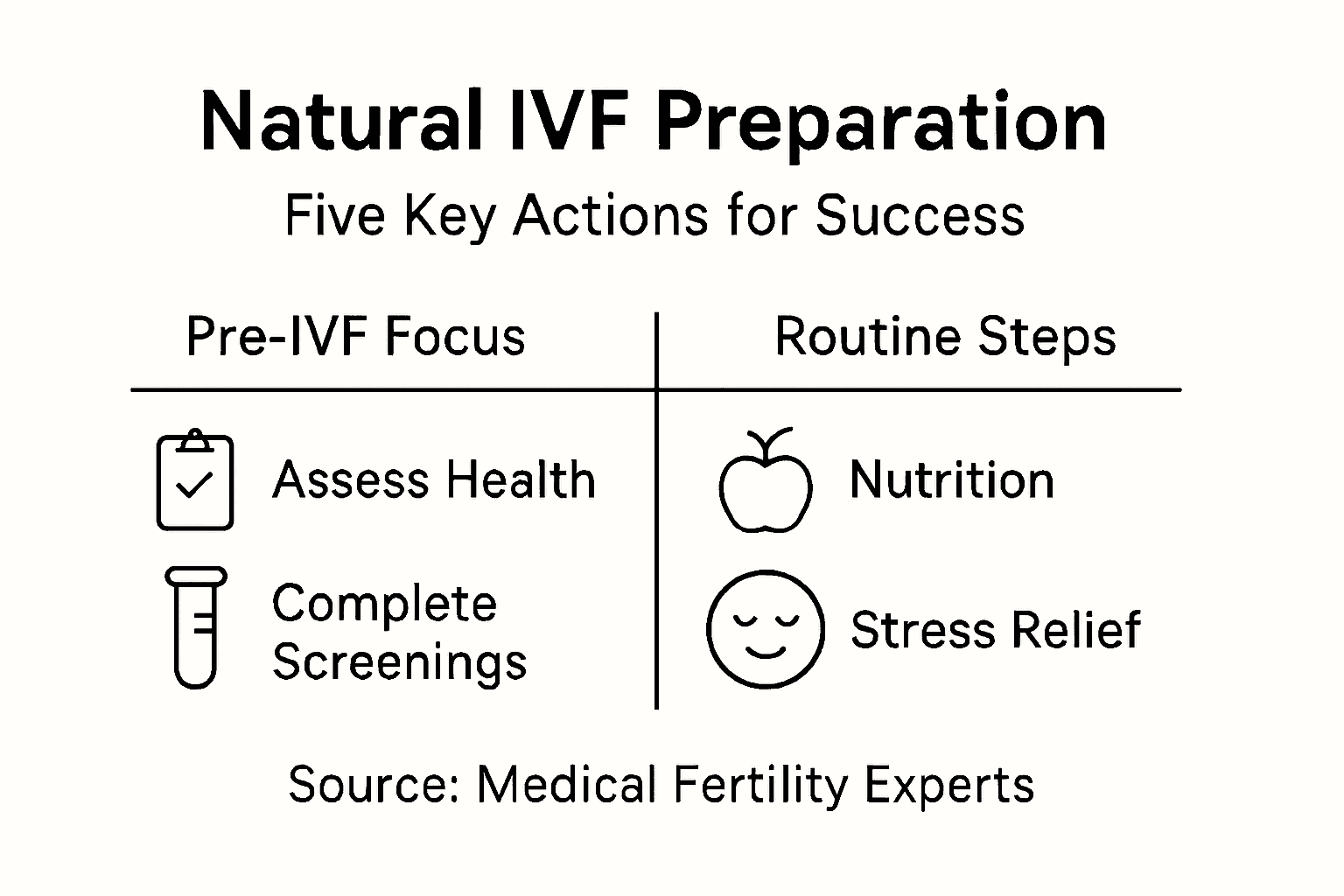
3. Implement pre-IVF health modifications | Adopt a balanced diet, exercise, and stress reduction techniques to improve overall reproductive health prior to treatment. |
4. Complete necessary health screenings | Ensure comprehensive screenings for infectious diseases and genetic conditions to guide personalized fertility treatment plans. |
5. Verify readiness for IVF cycle | Confirm that all medical documentation is complete and logistics are arranged to facilitate a smooth IVF treatment experience. |
Step 1: Assess personal fertility and health status
Assessing your personal fertility and health status is the critical first step in preparing for IVF naturally. This comprehensive evaluation will help you understand your current reproductive health and identify potential areas for improvement before starting treatment.
To conduct a thorough fertility assessment, you’ll want to focus on several key areas. Comprehensive fertility evaluation requires a systematic approach that includes medical history, physical examination, and targeted diagnostic tests:
Obtain a detailed medical history including:
Previous pregnancies or miscarriages
Menstrual cycle regularity
Known reproductive health conditions
Family history of fertility challenges
Chronic medical conditions
Schedule comprehensive hormone testing to evaluate:
Anti-Müllerian hormone (AMH)
Follicle-stimulating hormone (FSH)
Estradiol levels
Thyroid function
Prolactin levels
A thorough fertility assessment provides critical insights into your reproductive potential and helps customize your IVF treatment strategy.
Additionally, schedule critical screenings like genetic carrier testing, sexually transmitted infection panels, and a comprehensive physical examination. Preconception health screenings can reveal underlying conditions that might impact your fertility treatment success.
Men should also undergo semen analysis to assess sperm count, motility, and morphology. This joint assessment ensures both partners have a complete understanding of their reproductive health before proceeding with IVF.
Pro tip: Request digital copies of all medical records and test results to maintain a comprehensive personal health portfolio for future reference.
Step 2: Consult with an AI-powered fertility specialist
Navigating your fertility journey requires expert guidance, and an AI-powered fertility specialist can provide personalized, data-driven insights to optimize your IVF preparation. These advanced consultations leverage cutting-edge technology to analyze your unique reproductive health profile with unprecedented precision.
AI-driven embryo assessment technologies are transforming how specialists evaluate fertility potential and develop targeted treatment strategies. During your consultation, expect a comprehensive evaluation that includes:
Detailed genetic and medical history review
Advanced diagnostic imaging analysis
Predictive risk assessments for potential fertility challenges
Personalized treatment pathway recommendations
Comprehensive genetic screening insights
AI-powered fertility consultations provide unprecedented personalization, helping you understand your unique reproductive potential with remarkable accuracy.
The consultation process typically involves multiple stages of technological assessment. Your specialist will use sophisticated algorithms to analyze factors like maternal age, genetic markers, and historical reproductive data to create a nuanced understanding of your fertility landscape.
Modern AI technologies enable specialists to predict complex embryo screening outcomes with remarkable accuracy. This means you’ll receive highly individualized recommendations that go far beyond traditional fertility assessments.
Here is a quick reference comparing traditional fertility assessments with AI-powered specialist consultations:
Aspect | Traditional Assessment | AI-Powered Consultation |
Data Analysis | Manual interpretation | Advanced algorithm-driven insights |
Personalization | Based on standard protocols | Highly tailored to individual profile |
Diagnostic Speed | Dependent on human review | Rapid, real-time processing |
Predictive Capability | Limited forecasting | Accurate outcome prediction |
Integration of Data | Separate test results | Unified, holistic evaluation |
Pro tip: Prepare a comprehensive medical folder with all previous test results and genetic history to maximize the effectiveness of your AI-powered fertility consultation.
Step 3: Follow recommended pre-IVF health routines
Preparing your body for IVF involves strategic health modifications that can significantly improve your chances of successful fertility treatment. Comprehensive pre-IVF health preparation is crucial for optimizing your reproductive potential and creating the most favorable conditions for embryo implantation.
Hormonal contraceptive pretreatment strategies can help regulate your menstrual cycle and prepare your body for fertility treatments. Key health routines to implement include:
Nutritional optimization
Daily folic acid supplementation
High-protein, balanced diet
Increased intake of fertility-supporting nutrients
Lifestyle modifications
Eliminate alcohol consumption
Stop smoking
Reduce caffeine intake
Medical preparations
Complete recommended health screenings
Adjust current medications
Manage chronic health conditions
Consistent, targeted health routines can dramatically improve your IVF success potential and overall reproductive health.
Your pre-IVF health routine should focus on creating an optimal physiological environment for potential pregnancy. Comprehensive pre-treatment guidelines recommend avoiding anti-inflammatory medications like aspirin and ibuprofen, instead using acetaminophen for pain management.

Additionally, consider stress reduction techniques such as meditation, gentle yoga, and regular sleep patterns. These holistic approaches complement medical preparations and support your body’s reproductive health.
This summary table highlights essential components for pre-IVF preparation:
Component | Importance | Potential Impact |
Nutrition & Supplements | Supports reproductive health | Enhances egg/sperm quality |
Lifestyle Changes | Reduces negative influences | Lowers risks during IVF |
Stress Management | Improves hormonal balance | Increases implantation success |
Medication Review | Ensures correct protocols | Prevents adverse interactions |
Pro tip: Create a detailed health tracking journal to monitor your nutrition, exercise, and wellness progress during pre-IVF preparation.
Step 4: Complete necessary screenings and optimize treatment
Understanding the comprehensive screening process is crucial for maximizing your IVF success potential. Strategic medical screening helps identify potential challenges and creates a personalized roadmap for your fertility journey.
Comprehensive infectious disease screening is fundamental to ensuring patient safety and treatment effectiveness. Essential screenings include:
Infectious Disease Panels
HIV testing
Hepatitis B and C screening
Syphilis detection
Gonorrhea and chlamydia tests
Genetic Screenings
Carrier screening for hereditary conditions
Cystic fibrosis testing
Fragile X syndrome evaluation
Immunity Checks
Rubella immunity verification
Varicella immunity assessment
Comprehensive medical screening provides the foundation for a successful and safe fertility treatment strategy.
Additionally, preimplantation genetic testing offers advanced insights into embryo health. This critical screening helps detect chromosomal abnormalities and inherited genetic disorders, particularly recommended for women over 37 or those with complex reproductive histories.
The screening process involves detailed blood work, genetic analysis, and comprehensive medical evaluations. Your fertility specialist will use these results to develop a highly personalized treatment approach that maximizes your chances of successful pregnancy.
Pro tip: Request digital copies of all screening results and maintain a comprehensive personal health portfolio to streamline future medical consultations.
Step 5: Verify readiness for IVF cycle start
Confirming your complete readiness for the IVF cycle requires meticulous preparation and strategic coordination with your medical team. Final readiness verification represents the critical bridge between preparation and active treatment.
Comprehensive medication and protocol review ensures you are fully prepared for the upcoming fertility treatment. Essential verification steps include:
Medical Documentation
Confirm all screening results are current
Review complete medical history
Validate insurance coverage
Medication Preparation
Verify injectable medication protocols
Check medication storage requirements
Understand precise administration instructions
Logistical Coordination
Confirm appointment schedules
Arrange transportation for monitoring visits
Prepare work and personal schedule flexibility
Your thorough preparation sets the foundation for a successful and smooth IVF treatment experience.
Careful coordination with your fertility nursing team will help synchronize the intricate timing of ovarian stimulation, monitoring visits, and subsequent procedures. This precise alignment maximizes your treatment’s potential for success.
Additionally, ensure you have comprehensive emotional and practical support systems in place. The IVF journey requires both medical precision and personal resilience.
Pro tip: Create a dedicated digital folder with all medical documents, medication instructions, and treatment schedules to maintain organized and stress-free preparation.
Take Control of Your IVF Journey with Advanced AI Support
Preparing for IVF naturally involves understanding your fertility health, completing thorough screenings, and following precise health routines as detailed in the guide. At Aurea Fertility, we understand the challenges and uncertainties you face during this crucial time. Our AI-driven approach personalizes each step of your fertility treatment, helping to reduce unnecessary tests while accelerating your path from assessment to embryo transfer. This means you can experience expert care that is both efficient and tailored specifically to your reproductive profile.
Why wait months when you can start your journey with confidence today? Visit Aurea Fertility to explore how our AI-assisted protocols for embryo monitoring, male fertility testing, and treatment planning combine with dedicated personal support 24/7. Take the next step now to improve your chances with innovative technology designed for faster, more affordable, and patient-centered fertility care. Learn more about optimizing your IVF preparation by consulting with our specialized team at Aurea Fertility. Start your personalized IVF readiness plan and feel empowered every step of the way.
Frequently Asked Questions
How do I assess my personal fertility before starting IVF naturally?
To assess your personal fertility, gather a detailed medical history, and schedule comprehensive hormone testing, including Anti-Müllerian hormone (AMH) and Follicle-Stimulating Hormone (FSH) levels. Begin by making a list of any previous pregnancies, menstrual cycle regularities, and known reproductive health conditions.
What screenings should I complete to prepare for IVF?
You should complete essential screenings such as infectious disease panels (including HIV and Hepatitis testing), genetic screenings for hereditary conditions, and immunity checks for infections like Rubella. Aim to have these screenings done several weeks before starting your IVF cycle to ensure all results are ready.
How can I consult an AI-powered fertility specialist?
To consult with an AI-powered fertility specialist, find a clinic that offers this service and book an appointment for a personalized evaluation. Bring all relevant medical records and test results to the consultation to maximize the insights from the AI analysis.
What nutritional changes can I make to prepare for IVF naturally?
Focus on optimizing your nutrition by incorporating a high-protein diet and taking daily folic acid supplements. Aim to increase your intake of fertility-supporting nutrients, and consider tracking your dietary habits for at least 30 days to observe any changes in your physical health.
How can I verify my readiness for the IVF cycle to start?
To verify your readiness, review all your screening results and confirm that your medication protocols are prepared. Make a checklist of required documents, check your schedule for upcoming appointments, and ensure you have a support system in place before starting the IVF cycle.
Recommended


Comments