
How to Optimize Egg Freezing Naturally for Best Results
- Feb 20
- 8 min read

Choosing the right time to freeze your eggs can feel confusing when you want answers quickly without breaking the bank. For women under 40 with strong ovarian reserve, clarity and speed matter just as much as affordability and trust. With advanced AI-driven assessment, you skip the guesswork and receive a personalized ovarian reserve analysis that outperforms conventional tests, giving you more control over your fertility journey right from your first visit.
Table of Contents
Quick Summary
Key Insight | Explanation |
1. AI enhances ovarian reserve assessments | AI combines multiple biomarkers for a complete view, improving egg freezing success rates. |
2. Personalized stimulation plans optimize treatment | AI-driven dosing recommendations minimize medication waste and side effects based on individual response. |
3. Precise trigger timing maximizes mature egg yield | AI monitoring ensures retrieval is optimally timed, reducing risks of overstimulation. |
4. AI-driven egg quality scoring removes subjectivity | Objective scoring assesses egg potential accurately, guiding which eggs to freeze for best outcomes. |
5. Digital access to results streamlines process | Requesting baseline test results digitally facilitates quicker analysis and more efficient treatment initiation. |
Step 1: Assess ovarian reserve using AI-assisted protocols
Your ovarian reserve is the number and quality of eggs available right now. Understanding this accurately determines your egg freezing timeline and success rates. Traditional methods give you a partial picture, but AI-assisted assessment provides a complete, personalized view.
AI protocols combine multiple biomarkers into one reliable prediction. Instead of relying on a single blood test, the system integrates data points like anti-Müllerian hormone (AMH), antral follicle count (AFC), and other clinical markers. Research shows that machine learning models using tools like LightGBM achieve superior accuracy by analyzing these biomarkers together across diverse patient populations.
Here’s what happens during an AI-assisted ovarian reserve assessment:
Your clinic obtains baseline blood work measuring AMH, FSH, and estradiol levels
An ultrasound counts your antral follicles (small follicles visible on the ovaries)
The AI algorithm processes your age, hormone levels, ultrasound findings, and medical history
You receive a quantitative score for egg quantity and a qualitative assessment for egg health
The AI doesn’t replace your doctor’s judgment. Instead, it enhances it by identifying patterns that human analysis alone might miss. A random forest machine learning model tested on 442 patients achieved 91% accuracy for quantity prediction and 80% for quality assessment, outperforming conventional methods.
AI-assisted ovarian reserve assessment detects ovarian aging earlier and more accurately than traditional testing, enabling faster treatment decisions.
Within days, you’ll have a comprehensive report showing your realistic egg retrieval expectations. This number guides your personalized protocol and helps set appropriate expectations before starting stimulation medication.
Pro tip: Request your complete baseline bloodwork and ultrasound results in digital format before your first consultation. This allows the AI system to process your data immediately, reducing delays and getting you started on your timeline within days instead of weeks.
This reference table highlights key biomarkers and analytics used by AI in egg freezing:
Biomarker or Data Point | What It Indicates | Why AI Uses It |
Anti-Müllerian Hormone (AMH) | Ovarian reserve quantity | Accurate reserve prediction |
Antral Follicle Count (AFC) | Number of developing follicles | Predicts egg yield potential |
Estradiol and FSH Levels | Hormonal readiness for retrieval | Adjusts medication dosages |
Age and Medical History | Individual fertility background | Personalizes all recommendations |
Here’s a summary comparing traditional and AI-assisted methods used in the egg freezing process:
Process Step | Traditional Approach | AI-Assisted Approach |
Ovarian Reserve Assessment | Uses one or two biomarkers | Combines multiple biomarkers |
Stimulation Plan Design | Based on average clinical protocols | Tailored dosing from analytics |
Trigger Timing for Retrieval | Estimated by physician experience | Data-driven timing prediction |
Egg Quality Assessment | Subjective embryologist evaluation | Objective computer vision score |
Step 2: Personalize stimulation plan with advanced analytics
Your stimulation protocol is custom medicine tailored to your body. Generic dosing wastes medication and time, but advanced analytics predict exactly how your ovaries respond before you inject the first dose. This personalization accelerates your timeline and minimizes side effects.
The AI analyzes your baseline data to craft your dosing strategy. Your antral follicle count, AMH level, body mass index, and age feed into the algorithm, which then recommends your starting gonadotropin dose and monitoring schedule. AI-assisted dosing optimizations reduce medication exposure while maintaining or improving mature egg yields compared to conventional dosing.
Here’s how your personalized plan gets built:
The system calculates your predicted response to stimulation based on your ovarian reserve assessment
Starting dose recommendations consider your specific sensitivity to follicle-stimulating hormone
Your monitoring frequency and trigger timing are preset based on your response profile
The protocol adjusts if needed during your cycle based on real-time ultrasound data
This matters because two women with identical AMH levels often respond completely differently to the same dose. One might overstimulate while another understimulates. AI models comparing reproductive endocrinologists’ recommendations01274-9/fulltext) with AI-generated protocols show that data-driven personalization catches these individual variations that clinical intuition alone might miss.
Personalized stimulation protocols reduce excess medication while maximizing egg quality and quantity, cutting your treatment duration significantly.
You’ll know your exact injection schedule, timing, and what to expect during monitoring visits. This clarity reduces anxiety and lets you plan your calendar knowing precisely when appointments fall.
Pro tip: Track your daily estradiol levels and follicle sizes in a spreadsheet or notes app during stimulation. Comparing your actual numbers to your predicted response helps you understand how your body reacted, providing valuable data if you freeze eggs again in the future.
Step 3: Execute egg retrieval with AI-monitored precision
Egg retrieval day arrives when your follicles reach optimal maturity. Timing matters tremendously because retrieving too early or too late reduces your mature egg count. AI monitoring predicts exactly when to trigger your final injection and schedule your procedure.
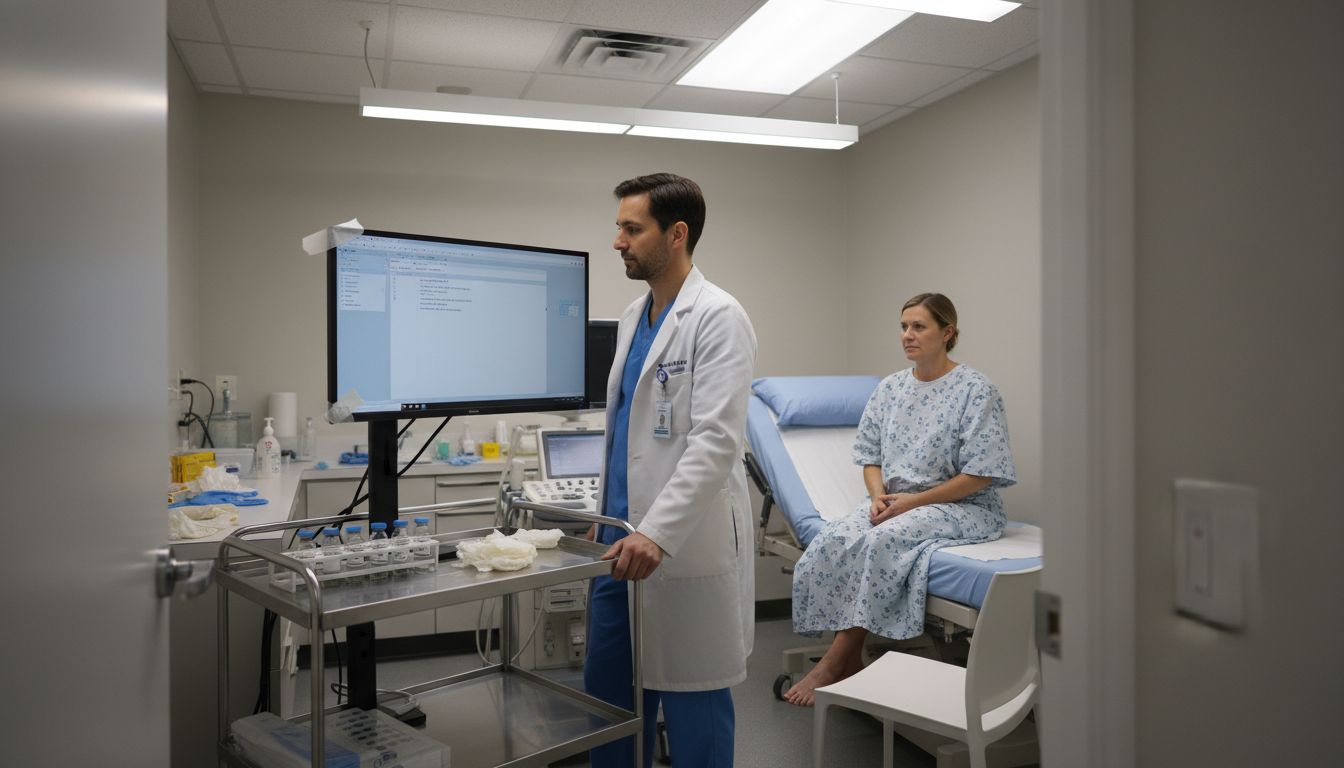
The AI tool tracks your follicle growth throughout stimulation and forecasts your mature egg yield. Using your baseline demographics, lab results, and how your follicles are responding, AI models predict mature oocyte yield with remarkable accuracy, typically within 3.5 eggs of the actual retrieval count. This precision lets your clinic schedule your procedure confidently and prepare the lab appropriately.
Here’s what happens during your retrieval cycle:
You undergo daily or every-other-day ultrasounds to monitor follicle diameter and count
Blood tests check your estradiol and progesterone levels to confirm proper response
When follicles reach 17 to 18 millimeters, the AI confirms you’re ready for trigger
You receive your trigger injection exactly 35 to 36 hours before your scheduled retrieval
Timing precision prevents complications. Overstimulation can cause ovarian hyperstimulation syndrome, while premature retrieval means fewer mature eggs. The AI balances these risks by analyzing your individual response pattern rather than applying one-size-fits-all protocols.
AI-monitored trigger timing maximizes your mature egg retrieval while minimizing overstimulation risk, giving you the best possible outcome for a single cycle.
Your retrieval procedure takes 15 to 20 minutes under light sedation. A specialist uses ultrasound guidance to aspirate each follicle, collecting your eggs into collection tubes. You’ll recover within an hour and go home the same day.
Pro tip: Arrange your retrieval for early morning if possible, which typically allows more time for egg assessment before you leave the clinic. Ask your coordinator if they can share preliminary mature egg counts the same day, giving you immediate feedback on your cycle outcome.
Step 4: Verify egg quality through AI-driven scoring
Your eggs are retrieved, but not all are equal. Quality varies based on morphology, maturity, and developmental potential. AI-driven scoring systems assess each egg objectively, removing guesswork and giving you confidence about which eggs to freeze.
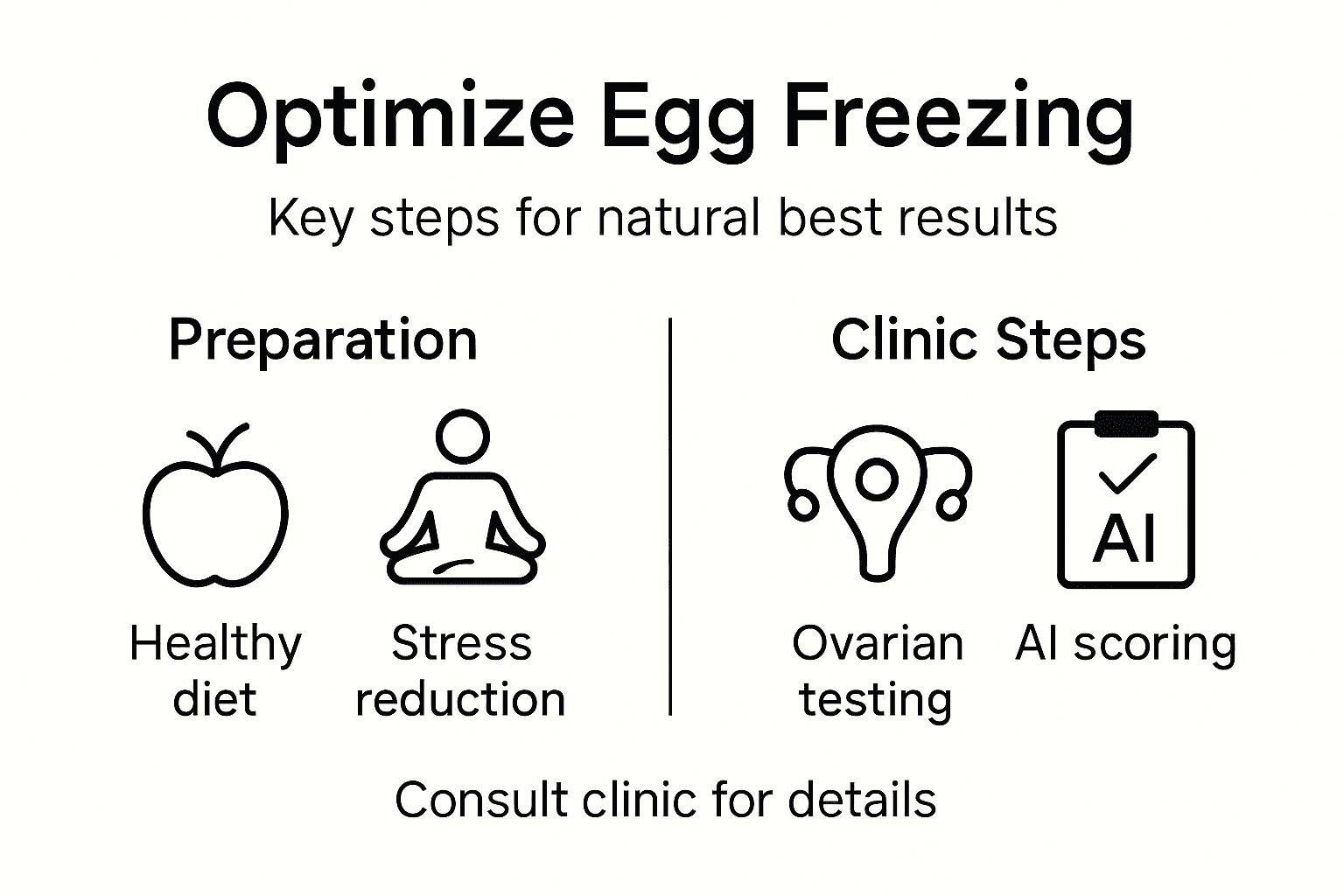
AI quality scores analyze egg morphology using computer vision technology. Instead of a embryologist’s subjective impression, the system examines your egg’s size, shape, cytoplasm appearance, and polar body characteristics. AI-based oocyte quality scoring systems like the Magenta Score significantly predict fertilization rates and blastocyst development across diverse patient populations, providing reproducible assessments independent of observer bias.
Here’s what the AI scoring process involves:
Images of each egg are captured under the microscope immediately after retrieval
The AI algorithm analyzes morphological features and assigns a quality score
Higher scores indicate better developmental potential and fertilization likelihood
Scores combine with your age and other factors for personalized predictions
This matters because two eggs that look similar under a microscope may have different developmental capacity. The AI detects subtle patterns that predict whether an egg will fertilize, develop into a blastocyst, and ultimately become a healthy embryo. AI quality scores predict blastulation outcomes in frozen eggs with measurable accuracy, helping identify which eggs deserve your investment in freezing.
AI-driven egg quality scoring removes subjectivity and predicts developmental potential with scientific precision, ensuring you freeze your best eggs.
You’ll receive a detailed report showing each egg’s score and your clinic’s recommendation for freezing. Eggs with higher scores get priority because they’re statistically more likely to become viable embryos when you use them later.
Pro tip: Ask your clinic for both the visual morphology assessment and the AI quality score for each egg. Understanding your specific egg quality profile helps you make informed decisions about how many eggs to freeze and sets realistic expectations for future fertility treatment success.
Optimize Your Egg Freezing Journey with AI-Powered Care
The challenge of accurately assessing ovarian reserve and personalizing stimulation protocols naturally to maximize egg quality calls for advanced solutions that go beyond traditional testing. Many women feel anxious about timing, medication dosing, and egg quality uncertainty. This article highlights the power of AI-assisted assessments and personalized stimulation to help you confidently plan your egg freezing process with greater precision and less emotional stress.
At Aurea Fertility, we combine cutting-edge AI technology with expert clinical care to transform your fertility experience. Our AI-driven protocols ensure you get a comprehensive ovarian reserve evaluation, custom stimulation plans, and precise egg retrieval timing that are tailored specifically to your unique biology. This means faster treatments often completed within two weeks instead of months, fewer unnecessary tests, and affordable care crafted for women who prioritize speed, personalization, and the best possible outcomes.
Take control of your fertility today by visiting Aurea Fertility’s homepage to explore how our technology-enhanced egg freezing services can help you optimize your natural potential. Learn more about AI-assisted egg freezing and begin your personalized journey where advanced science meets compassionate support. Your future is waiting, don’t delay planning your optimized egg freezing strategy now.
Frequently Asked Questions
How can I naturally boost my ovarian reserve before egg freezing?
To naturally enhance your ovarian reserve, focus on a balanced diet rich in antioxidants, vitamins, and healthy fats. Incorporate foods like avocados, nuts, and leafy greens into your meals to potentially optimize your egg quality within a few months.
What lifestyle changes can improve my chances of successful egg freezing?
Adopting a healthy lifestyle can significantly elevate your chances. Aim to exercise regularly, minimize stress through practices like yoga or meditation, and avoid smoking and excessive alcohol, all of which can improve your overall reproductive health over a few weeks.
Are there specific supplements that can support my egg freezing process?
Certain supplements, like CoQ10, DHEA, and vitamin D, may support egg quality and ovarian health. Consult your healthcare provider to create a personalized supplement plan that you can begin implementing right away, ideally starting 30–60 days before your egg freezing procedure.
How does my age affect the natural optimization of egg freezing results?
Age plays a crucial role in egg quality and quantity; younger women typically have better outcomes. To optimize results naturally, consider beginning your egg freezing process earlier, ideally before the age of 35, to enhance your chances of retrieving higher quality eggs.
What role does stress play in optimizing egg freezing outcomes?
Stress can negatively impact hormonal balance and overall reproductive health. To optimize your egg freezing outcomes, engage in regular stress-reducing activities like mindfulness or hobbies, aiming to practice these techniques daily for lasting benefits.
Can a healthy weight improve my egg freezing results?
Maintaining a healthy weight is crucial, as both underweight and overweight conditions can affect hormone levels and egg quality. Focus on achieving and maintaining a body mass index (BMI) within the normal range to optimize your chances, ideally over a span of several months.
Recommended
Comments