
Egg Freezing: Preserving Fertility With AI Precision
- Jan 2
- 7 min read

A growing number of American women under 40 with strong ovarian reserve are exploring egg freezing to gain control over future family planning. Nearly 40 percent of professional women now consider social egg freezing before age 35 for added reproductive flexibility and peace of mind. Advances in personalized, AI-driven reproductive healthcare empower younger women globally to make well-informed, proactive choices about fertility preservation without sacrificing their long-term goals.
Table of Contents
Key Takeaways
Point | Details |
Egg Freezing Benefits | Egg freezing offers women the ability to extend reproductive choices, enhancing future family planning flexibility. |
Age Impact | Optimal egg retrieval occurs before age 35 to maximize egg quality and success chances. |
AI Integration | Artificial intelligence enhances the egg freezing process by providing precise assessments of egg viability and potential outcomes. |
Cost Considerations | The financial investment for egg freezing varies; understanding costs and success rates is crucial for informed decision-making. |
Egg Freezing Defined and Common Misconceptions
Egg freezing, scientifically known as oocyte cryopreservation, is a sophisticated fertility preservation technique that allows women to store healthy eggs for potential future use. This proactive approach empowers women to extend their reproductive choices by pausing their biological clock. Emerging research shows egg freezing provides strategic reproductive flexibility for individuals wanting to delay childbearing while maintaining biological fertility potential.
The process involves multiple precise medical steps: ovarian stimulation through hormone treatments, careful egg retrieval under medical supervision, and advanced flash-freezing techniques that preserve egg cellular integrity. Unlike common misconceptions, egg freezing isn’t a guaranteed pregnancy solution but a strategic option that increases potential future reproductive opportunities. Successful outcomes depend on critical factors like the woman’s age during egg retrieval, overall reproductive health, and the number of eggs successfully stored and later thawed.
Common misconceptions about egg freezing often stem from incomplete understanding. Many believe it’s exclusively a medical intervention for patients undergoing treatments like chemotherapy. However, social egg freezing has become increasingly popular among professional women seeking to align family planning with career trajectories. Another prevalent myth suggests egg freezing guarantees future pregnancy - while it significantly improves chances, success isn’t absolute and varies based on individual health factors.
Pro tip: Consider consulting a fertility specialist who can conduct comprehensive ovarian reserve testing to determine your personal egg freezing potential and develop a personalized preservation strategy.
Who Should Consider Egg Freezing and When
Egg freezing represents a strategic fertility preservation option for women facing diverse life circumstances. Access to egg freezing varies widely, influenced by medical necessity, age, and individual reproductive goals. While traditionally considered a medical intervention, it has evolved into a proactive reproductive choice for many professional women planning their futures.
Certain demographic groups are particularly well-suited for egg freezing. Medical candidates include women undergoing treatments that might compromise fertility, such as chemotherapy or radiation. Professional women delaying childbearing for career development frequently explore this option. Transgender individuals preparing for gender-affirming treatments may also benefit from preserving reproductive potential. Research recommends considering egg freezing before significant reproductive aging occurs, typically before age 35, when egg quality remains highest.
Key indicators suggesting egg freezing might be appropriate include: approaching mid-30s without immediate pregnancy plans, experiencing potential fertility-compromising medical treatments, wanting flexibility in family planning, or having a family history of early menopause. The optimal window typically spans late 20s to mid-30s, when egg quantity and quality remain robust. Success rates dramatically decrease after age 35, making timely decision-making crucial for those considering this reproductive strategy.
Pro tip: Schedule a comprehensive fertility assessment with a specialist to evaluate your personal egg quality, quantity, and potential preservation strategy before your mid-30s.
Egg Freezing Process Enhanced by AI-Driven Care
Artificial intelligence is revolutionizing the egg freezing process, transforming what was once a highly subjective medical procedure into a precise, data-driven experience. AI tools now provide objective assessments of egg quality and viability, analyzing microscopic images with unprecedented accuracy to predict fertilization success and embryo development probabilities.
The AI-enhanced egg freezing journey begins with advanced imaging technologies that meticulously evaluate each egg’s potential. Sophisticated algorithms can now predict the likelihood of individual eggs developing into viable embryos, offering patients unprecedented insights into their reproductive potential. These intelligent systems analyze multiple parameters including egg morphology, cellular structure, and maturity markers, providing reproductive specialists with a comprehensive understanding of each egg’s potential for future successful fertilization.
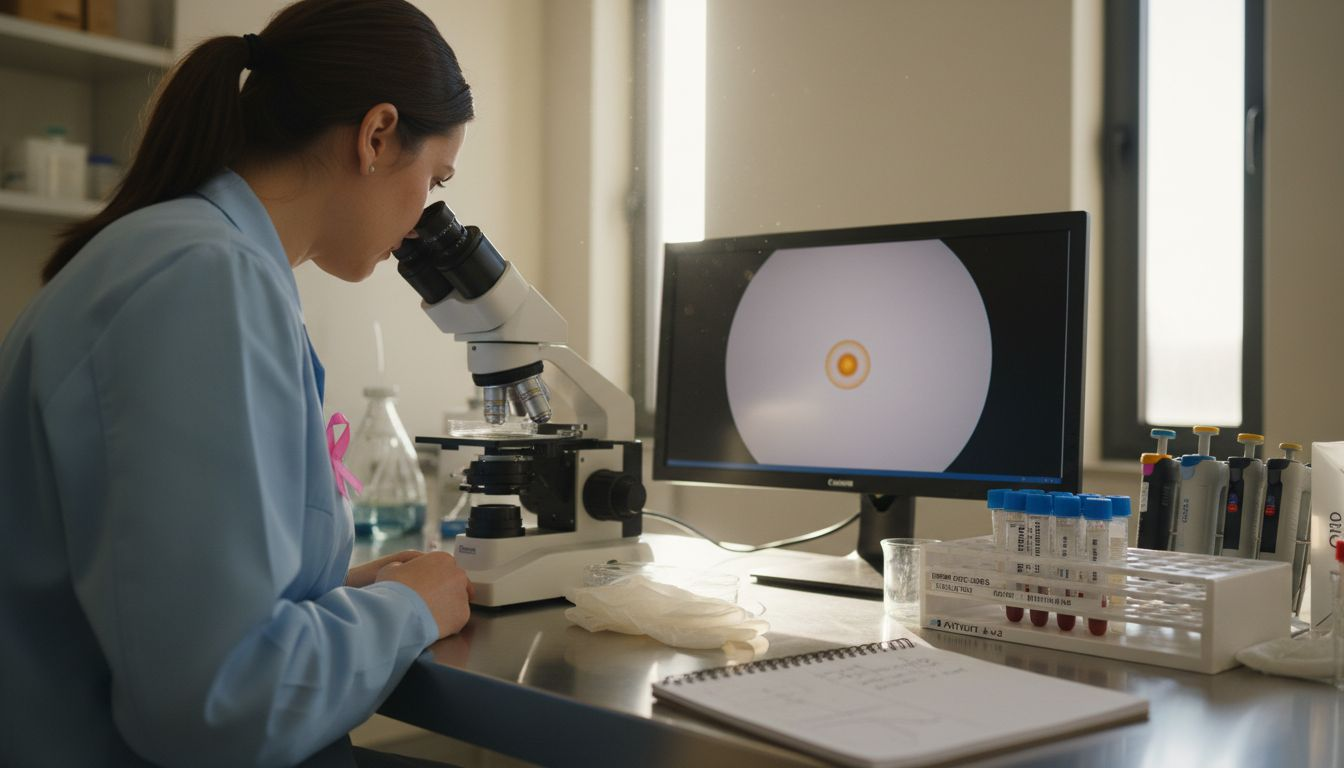
Traditional egg freezing methods relied heavily on visual inspection and manual assessment, introducing significant human variability. AI-driven approaches eliminate this subjectivity by implementing machine learning algorithms that can process thousands of data points instantaneously. The technology enables more personalized fertility planning, helping patients understand their specific chances of successful pregnancy and reducing unnecessary medical interventions. Key benefits include more accurate egg selection, optimized freezing protocols, and enhanced patient counseling about realistic reproductive outcomes.
Pro tip: Request a detailed AI-assisted fertility assessment that provides comprehensive insights into your egg quality and potential future reproductive success.
Cost, Success Rates, and Safety Considerations
Elective egg freezing represents a significant financial investment that requires careful consideration of potential outcomes and associated expenses. Comprehensive research highlights the complexity of fertility preservation, noting that the procedure involves sophisticated medical protocols with variable success rates, typically ranging between $10,000 and $15,000 per egg freezing cycle. The total cost encompasses multiple components: initial consultation, hormonal stimulation medications, egg retrieval procedure, laboratory processing, and long-term storage fees.
Success rates for egg freezing are intricately linked to a woman’s age at the time of egg retrieval. Generally, women under 35 experience the highest probability of future successful pregnancy, with approximately 60-70% of frozen eggs remaining viable after thawing. The number of eggs stored significantly impacts potential outcomes, with reproductive specialists typically recommending 10-15 eggs per desired future pregnancy. Advanced vitrification techniques have dramatically improved egg survival rates, reducing cellular damage during the freezing and thawing processes and increasing overall reproductive potential.
Safety considerations remain paramount in egg freezing procedures. Medical studies consistently demonstrate minimal long-term risks for women undergoing the process, with most side effects related to hormonal stimulation being temporary and manageable. The controlled ovarian stimulation protocols have been refined to minimize potential complications, and subsequent pregnancies resulting from frozen eggs show comparable health outcomes to naturally conceived pregnancies. However, individual medical history, underlying health conditions, and genetic factors can influence personal risk profiles, necessitating comprehensive medical screening and personalized treatment approaches.
This summary highlights major factors influencing egg freezing success:
Factor | Impact on Outcomes | Optimal Condition |
Age at Egg Retrieval | Higher age reduces success rates | Under 35 years old |
Number of Eggs Stored | More eggs improve chances | 10-15 eggs per pregnancy |
Egg Quality | Poor quality lowers viability | Comprehensive testing pre-freeze |
Freezing Method | Impacts egg survival | Advanced vitrification |
Pro tip: Consult multiple fertility specialists to compare comprehensive cost estimates and understand the nuanced success probabilities specific to your individual reproductive health profile.
Egg Freezing Versus Alternative Fertility Options
Reproductive autonomy involves understanding multiple fertility pathways, with egg freezing emerging as a strategic but not exclusive option for family planning. Contemporary reproductive research emphasizes the importance of exploring comprehensive fertility preservation strategies, recognizing that no single approach fits every individual’s unique reproductive journey.
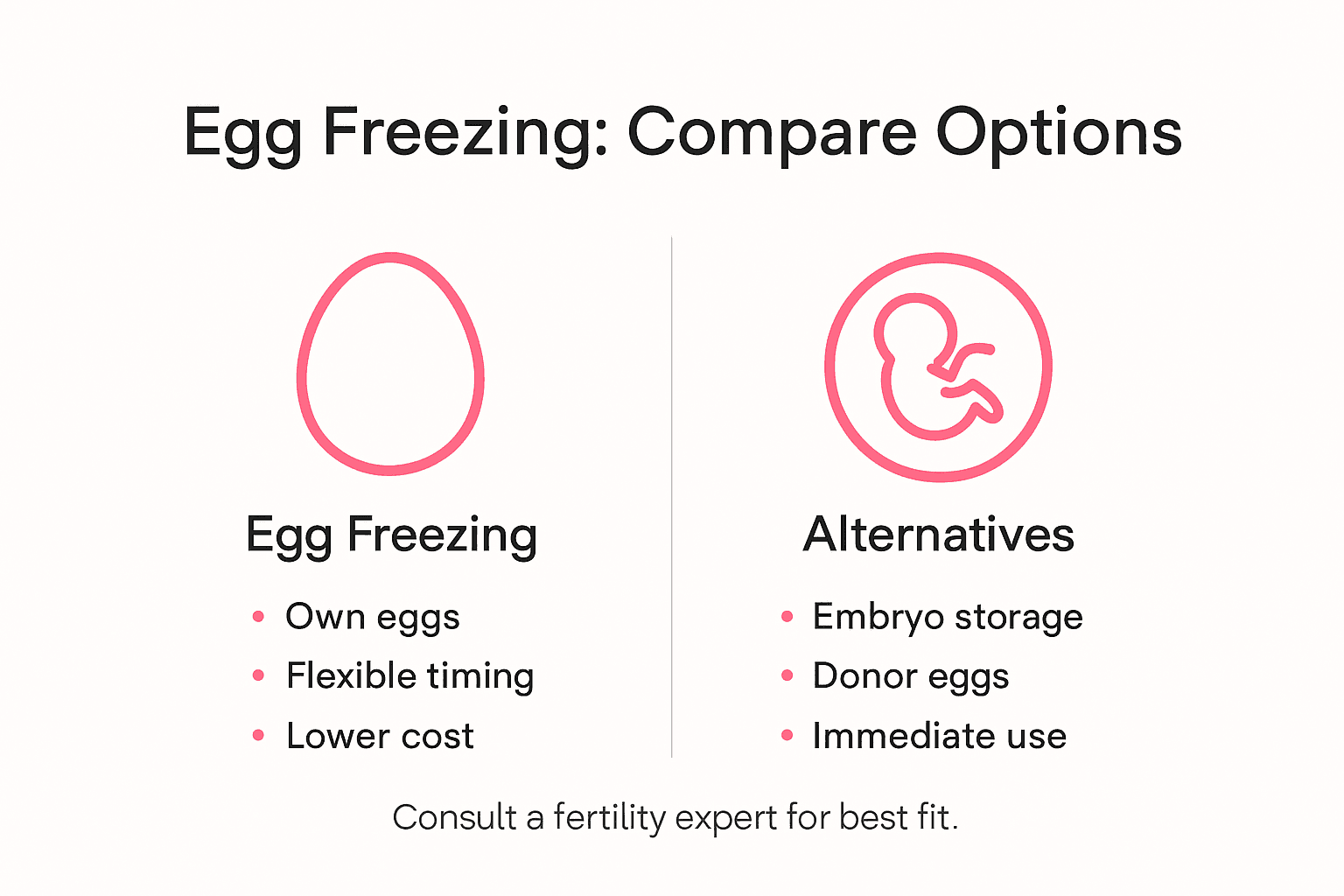
Alternative fertility options present distinct advantages and challenges. Embryo freezing offers higher success rates since fertilized eggs demonstrate greater survival potential compared to unfertilized eggs. Adoption provides a meaningful path to parenthood without biological constraints, while donor gamete approaches allow individuals to experience pregnancy and childbirth. Each method carries unique emotional, financial, and medical considerations. Egg freezing distinguishes itself by preserving biological potential while maintaining maximum future flexibility, allowing individuals to delay reproductive decisions without permanently closing biological pathways.
Here is a comparison of key fertility preservation options and their distinguishing features:
Option | Biological Connection | Typical Success Rate | Flexibility |
Egg Freezing | Preserves own eggs | 30-50% live births | Maximum future choice |
Embryo Freezing | Preserves fertilized eggs | 50-60% live births | Requires partner/donor |
Adoption | No genetic link | Not applicable | Child immediately available |
Donor Gametes | Partial genetic link | Varies by protocol | Pregnancy possible later |
Comparing fertility options requires deep personal reflection and professional medical guidance. Success rates vary dramatically: embryo freezing typically demonstrates 50-60% live birth rates, egg freezing ranges between 30-50%, and traditional fertility treatments fluctuate based on individual health profiles. Factors like age, overall health, financial resources, and personal values play crucial roles in determining the most suitable approach. The decision transcends medical statistics, encompassing emotional readiness, lifestyle considerations, and long-term family planning goals.
Pro tip: Schedule comprehensive consultations with reproductive specialists to conduct personalized fertility assessments that evaluate your specific medical history, reproductive potential, and align with your unique family-building objectives.
Preserve Your Fertility with AI-Driven Precision at Aurea Fertility
Egg freezing offers hopeful women the chance to extend their reproductive options while navigating challenges like age-related fertility decline and uncertainty about the future. This article highlights how AI technology delivers groundbreaking enhancements to egg quality assessment, personalized stimulation protocols, and success prediction. If you are seeking a tailored fertility preservation plan that combines cutting-edge artificial intelligence with compassionate care, Aurea Fertility is your partner in this journey.
Discover how our AI-integrated fertility treatments can optimize your egg freezing experience and improve your chances of future pregnancy. Act now to take control of your reproductive future by scheduling a consultation with our specialists who focus on personalized strategies for women under 40 with good ovarian reserve. Learn more about our innovative IVF, egg freezing, and embryo transfer protocols at Aurea Fertility. Explore our advanced approach to fertility care and start your path with confidence today by visiting https://aureafertility.com.
Frequently Asked Questions
What is egg freezing and how does it work?
Egg freezing, or oocyte cryopreservation, is a fertility preservation technique that involves stimulating the ovaries to retrieve and freeze healthy eggs for future use. The process includes hormonal treatments, egg retrieval under medical supervision, and advanced flash-freezing techniques to maintain cellular integrity.
Who should consider egg freezing?
Egg freezing is suitable for a variety of individuals, including women undergoing medical treatments that could harm fertility, professional women delaying childbearing, and transgender individuals preparing for gender-affirming treatments. It is generally recommended before age 35 to maximize egg quality and success rates.
How does AI enhance the egg freezing process?
AI enhances egg freezing by providing objective assessments of egg quality and viability. Advanced algorithms analyze microscopic images of eggs to predict fertilization success and embryo development, eliminating human variability and improving personalized fertility planning.
What are the success rates associated with egg freezing?
Success rates for egg freezing depend on a woman’s age at the time of egg retrieval. Generally, women under 35 have approximately 60-70% viability of frozen eggs after thawing. Storing a higher number of eggs (10-15 per desired pregnancy) can also improve potential outcomes.
Recommended


Comments