
How AI boosts fertility treatments for women in 2026
- 5 days ago
- 9 min read

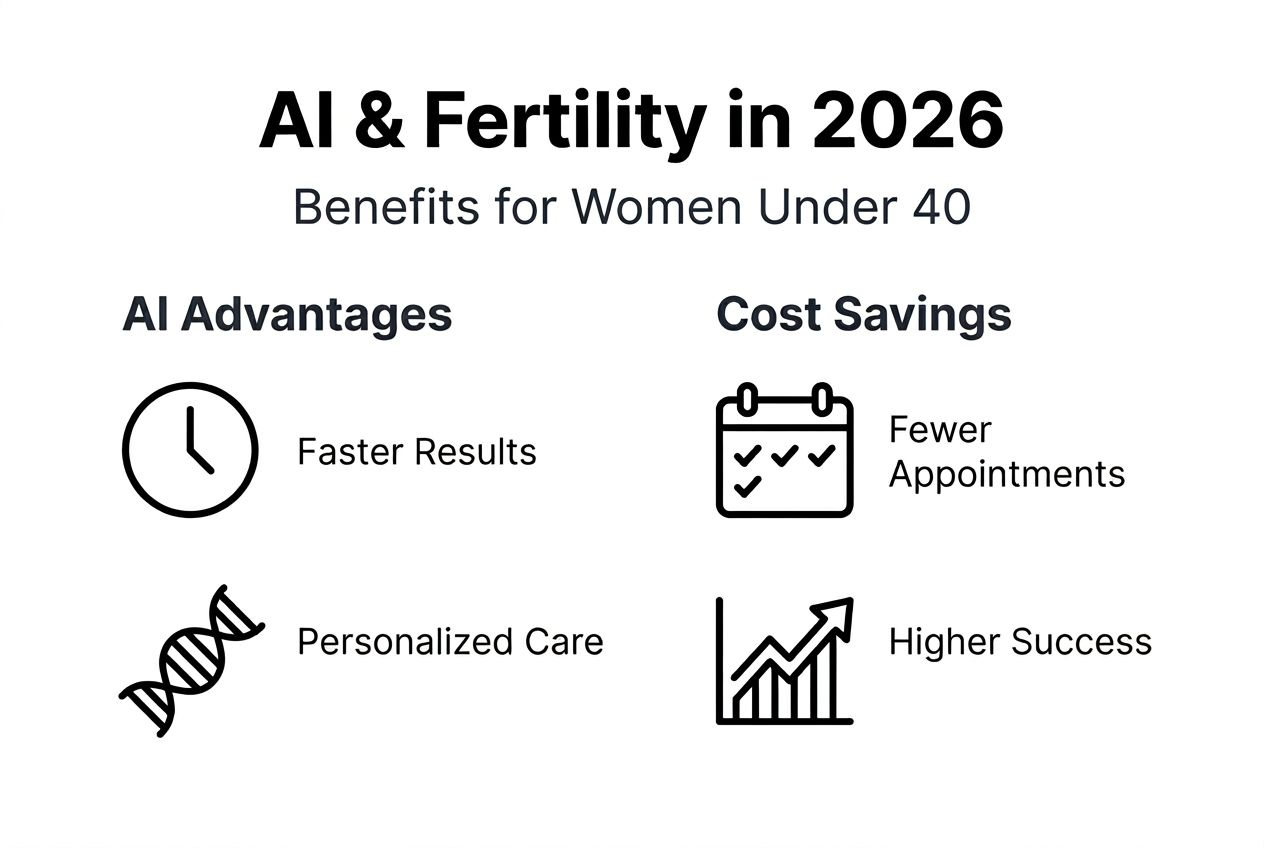
Artificial intelligence is revolutionizing fertility care, with studies showing AI-powered embryo selection can increase implantation rates by up to 20% compared to traditional methods. For women under 40 with good ovarian reserve, this technology offers faster, more personalized treatment pathways at lower costs. This guide explores how AI transforms reproductive medicine through enhanced embryo scoring, customized protocols, accelerated timelines, and cost savings that make fertility care more accessible.
Table of Contents
Key takeaways
Point | Details |
AI enhances success rates | AI-assisted embryo selection improves implantation by analyzing continuous development data rather than single snapshots. |
Personalized protocols save time | Tailored AI-driven treatment plans reduce cycles from months to weeks by eliminating unnecessary tests and procedures. |
Lower costs through efficiency | AI-driven care cuts treatment expenses 15-25% by optimizing protocols and reducing failed attempts. |
Rapid treatment pathways | AI streamlines diagnostics and decision-making, enabling two-week IVF cycles instead of traditional multi-month processes. |
Comprehensive support tools | AI enhances both male and female fertility diagnostics while supporting clinical decisions without replacing doctors. |
Introduction to AI in reproductive medicine
Artificial intelligence in fertility care refers to computer algorithms that analyze patient data, monitor embryo development, and recommend treatment protocols based on thousands of previous cases. Recent advancements have integrated AI to analyze data for personalized fertility treatment, making care more efficient and outcome-focused.
AI has evolved rapidly in reproductive medicine over the past five years. Early applications focused on basic data entry and record keeping. Today’s systems perform complex pattern recognition across hormone levels, genetic markers, and embryo morphology. This technology synthesizes information that would take humans weeks to process, delivering insights in real time.
For women under 40 with good ovarian reserve, AI addresses several common challenges:
Diagnostic delays: Traditional testing sequences stretch over months, but AI consolidates analysis into days
Protocol uncertainty: Standard one-size-fits-all approaches often miss individual optimization opportunities
Cost barriers: Repeated cycles from suboptimal decisions drain finances quickly
Emotional strain: Extended timelines amplify stress when faster pathways exist
AI performs four core functions in modern fertility clinics. First, it collects comprehensive patient data including medical history, hormone profiles, and genetic information. Second, algorithms analyze this data against extensive databases to identify patterns and predict outcomes. Third, the system generates evidence-based recommendations that clinicians review and refine. Fourth, AI-powered communication tools keep patients informed throughout their journey.
The technology fertility clinics use today combines machine learning with continuous monitoring systems. These tools don’t replace your doctor’s judgment. Instead, they enhance clinical decision-making by highlighting factors human observation might miss. Understanding this collaboration between AI and medical expertise helps you evaluate which clinics offer genuine technological advantages.
Women seeking fertility care benefit most when AI personalizes their treatment from day one. The 7 advantages of rapid IVF for women under 40 multiply when combined with AI-driven protocols that match your specific reproductive profile.
How AI enhances embryo selection and scoring
Traditional embryo assessment relies on embryologists examining developing embryos at specific time points, typically day three and day five after fertilization. This snapshot approach captures only moments in development, potentially missing critical growth patterns that indicate viability.
AI-powered systems use time-lapse imaging to monitor embryos continuously, capturing thousands of images throughout development. Algorithms analyze cell division timing, fragmentation patterns, and morphological changes that human observation cannot consistently track. This objective, data-driven approach removes variability between different embryologists’ assessments.

The EmbryoScope time-lapse monitoring system exemplifies this technology. Embryos remain in stable incubation conditions while cameras document their progress every few minutes. AI software processes these images, scoring each embryo based on developmental milestones proven to correlate with pregnancy success.
Assessment Method | Frequency | Subjectivity | Data Points | Success Rate |
Traditional morphology | 2-3 observations | High variability | 10-15 visual markers | Baseline |
AI time-lapse analysis | Continuous (1000+ images) | Standardized algorithms | 50+ developmental parameters | 15-20% higher implantation |
Research confirms AI-powered embryo selection algorithms improve outcomes by identifying subtle indicators invisible to standard microscopy. For example, the precise timing between the two-cell and four-cell stages predicts implantation potential. AI detects these intervals with precision impossible through manual observation.
Beyond scoring, AI helps prioritize which embryos to transfer first. If you have multiple high-quality embryos, the system ranks them by predicted success probability. This optimization means you’re more likely to achieve pregnancy on your first transfer, avoiding additional cycles and their associated costs.
Pro Tip: When researching clinics, ask specifically whether they use AI-enhanced time-lapse imaging throughout embryo culture. Not all time-lapse systems incorporate advanced AI analysis. The combination of continuous monitoring plus algorithmic assessment delivers the full benefit.
AI embryo scoring also reduces the emotional burden of decision-making. Instead of wondering whether your embryologist’s judgment was optimal, you have data-backed confidence in the selection process. This transparency helps you trust your treatment plan and focus energy on other aspects of your fertility journey.
Personalization of fertility treatments using AI
Every woman’s reproductive system responds differently to fertility medications and protocols. AI analyzes your specific markers including ovarian reserve indicators, hormone levels, previous cycle responses, and genetic factors to design customized treatment plans.
Traditional protocols often follow standardized medication dosing based on age and basic testing. AI systems process hundreds of variables simultaneously, identifying the optimal stimulation approach for your physiology. This precision reduces unnecessary medication, minimizes side effects, and improves egg quality.
For women under 40 with good ovarian reserve, personalization prevents over-stimulation while maximizing mature egg retrieval. The role of AI in egg freezing demonstrates how algorithms predict your response to different medication protocols, allowing clinicians to adjust dosing proactively rather than reactively.
AI-driven personalization delivers multiple benefits:
Higher success rates: Tailored protocols match your body’s natural patterns rather than forcing generic approaches
Fewer side effects: Precise medication dosing reduces bloating, mood changes, and ovarian hyperstimulation risk
Cost savings: Eliminating trial-and-error cycles saves thousands in medication and procedure fees
Faster results: Optimized protocols often succeed in fewer attempts, compressing your timeline to pregnancy
Reduced testing burden: AI identifies which tests genuinely inform your treatment versus those that add expense without insight
Consider how personalization works in practice. After your initial consultation and testing, AI analyzes your ovarian reserve markers against thousands of similar patient profiles. The system identifies which stimulation protocol produced optimal outcomes for women with your characteristics. Your doctor reviews these recommendations, applies clinical judgment, and creates your customized plan.
Examples of AI in IVF for rapid fertility care show how this technology compresses decision-making from weeks to days. Instead of starting with a standard protocol and adjusting after observing your response, AI predicts your response before treatment begins. This proactive approach eliminates the guesswork that extends timelines.
Pro Tip: During your clinic consultation, ask how they use your individual data to customize protocols. Clinics with genuine AI integration should explain specific factors from your profile that influenced medication selection and dosing. Generic answers about “personalized care” without data-driven specifics may indicate limited AI application.
Personalization extends beyond medication to include cycle timing, supplement recommendations, and lifestyle modifications tailored to your needs. AI doesn’t just treat fertility conditions. It optimizes your entire reproductive health based on evidence from thousands of successful cases matching your profile.
Accelerating fertility treatment timelines with AI
Traditional IVF timelines stretch across three to six months from initial consultation to embryo transfer. AI compresses this process dramatically, with some clinics offering complete cycles in two weeks. This acceleration comes from streamlined decision-making at every treatment stage.
Here’s how AI reduces each phase:
Diagnostic consolidation: AI processes comprehensive testing panels simultaneously rather than sequentially, delivering complete analysis in days instead of weeks
Protocol selection: Algorithms recommend optimal stimulation plans immediately after diagnostic completion, eliminating the consultation delays typical in manual review
Real-time monitoring: Continuous data feeds allow instant protocol adjustments during stimulation rather than waiting for scheduled check-ins
Embryo assessment: Time-lapse AI scoring delivers transfer-ready recommendations within hours of reaching blastocyst stage
Transfer timing: Predictive algorithms identify your optimal implantation window with precision, maximizing first-attempt success
Consider a real-world application. A 35-year-old woman with normal ovarian reserve begins her cycle. AI analysis of her hormone profile predicts excellent response to a moderate stimulation protocol. Time-lapse monitoring tracks her embryos continuously, with algorithms identifying the highest-quality blastocyst by day five. She completes her transfer just 14 days after starting medication.
The 7 advantages of rapid IVF for women under 40 include emotional relief from shortened waiting periods. Each week of delay amplifies anxiety and extends the period before you can attempt pregnancy. Faster cycles mean earlier outcomes, whether that’s a positive pregnancy test or the ability to adjust your approach quickly if needed.
Speed also controls costs. Shorter cycles require fewer monitoring appointments, reduce time off work, and minimize the stress-related expenses that accumulate during extended treatment. When AI helps you succeed on your first or second attempt rather than your fourth or fifth, the financial impact compounds significantly.
Clinics offering AI-powered rapid protocols make this possible through integrated systems that coordinate every team member’s work. Your doctor receives real-time updates on embryo development. Embryologists access AI scoring the moment it’s available. Nurses schedule procedures based on predictive timing rather than fixed calendars.
Choosing a clinic with genuine AI integration means verifying they’ve implemented these systems across all treatment phases. Ask about their average timeline from consultation to transfer for patients with your profile. Clinics leveraging AI fully should cite timelines substantially shorter than traditional three to six month averages.
Cost benefits of AI-driven fertility care
Fertility treatment expenses create significant barriers for many women. AI-driven care cuts treatment expenses 15-25% through multiple mechanisms that reduce both direct procedure costs and indirect financial impacts.
Cost Category | Traditional Approach | AI-Driven Approach | Savings |
Diagnostic testing | $3,000-5,000 | $2,000-3,500 | 30-35% |
Medication protocols | $4,000-6,000 | $3,000-4,500 | 20-25% |
Monitoring appointments | $1,500-2,500 | $800-1,500 | 40-45% |
Failed cycle costs | $12,000-15,000 (avg. 2.5 cycles) | $8,000-10,000 (avg. 1.6 cycles) | 30-35% |
Total average cost | $20,500-28,500 | $13,800-19,500 | 32-35% |
AI reduces expenses through several pathways:
Eliminated unnecessary tests: Algorithms identify which diagnostics genuinely inform treatment versus those adding cost without value
Optimized medication dosing: Precise protocols avoid over-purchasing medications that go unused when standard dosing doesn’t match your needs
Fewer monitoring visits: Continuous AI tracking reduces the number of in-clinic ultrasounds and blood tests required
Higher first-cycle success: Better embryo selection and personalized protocols increase pregnancy likelihood per transfer
Avoided failed attempts: Improved decision-making prevents cycles likely to fail, saving the full cost of repeated procedures
Long-term financial benefits extend beyond single-cycle savings. Women who achieve pregnancy faster through AI-optimized care avoid the cumulative costs of extended treatment. Multiple failed cycles don’t just double or triple expenses. They add stress-related costs including therapy, time off work, and relationship strain.
The cost effectiveness of fertility treatments improves dramatically when success rates rise. If AI increases your per-cycle pregnancy chance from 40% to 50%, you’re statistically likely to succeed after two attempts rather than three. That single cycle difference represents $10,000 to $15,000 in savings.
Indirect cost reductions matter too. Shorter treatment timelines mean fewer days away from work. Reduced emotional stress may decrease spending on coping mechanisms. Faster success allows you to reallocate financial resources toward pregnancy and parenting rather than extended fertility treatments.
Research on why AI increases IVF success demonstrates these cost benefits compound across all patient populations. For women under 40 with good ovarian reserve, the combination of high baseline success potential plus AI optimization creates ideal conditions for cost-effective treatment.
When evaluating clinic pricing, look beyond sticker costs. Ask about average cycles to pregnancy for patients matching your profile. Request data on how their AI systems reduce unnecessary procedures. Calculate total expected costs including potential multiple attempts rather than focusing solely on per-cycle pricing.
Explore AI-integrated fertility solutions at Aurea
Aurea Fertility Center offers comprehensive AI-integrated treatments designed specifically for women under 40 seeking personalized, efficient care. Our affordable IVF starting at $4,900 includes advanced AI protocols that compress traditional multi-month timelines into rapid two-week cycles.
Our EmbryoScope time-lapse monitoring system provides continuous embryo assessment with AI-powered scoring, maximizing your implantation success. Every treatment plan incorporates data-driven personalization that eliminates unnecessary procedures while optimizing outcomes.
Learn more about Aurea’s approach to combining cutting-edge AI technology with compassionate, expert clinical care. Our team supports you through every decision with 24/7 communication and transparent guidance. Discover how AI-powered fertility care can accelerate your path to parenthood while reducing costs and stress.
Frequently asked questions about AI in reproductive medicine
Does AI replace my fertility doctor?
No, AI supports your doctor’s clinical decisions by analyzing data and identifying patterns across thousands of cases. Your physician reviews AI recommendations, applies medical judgment, and personalizes your care. The technology enhances expertise rather than substituting for it.
Will AI guarantee I get pregnant?
AI improves your success probability by optimizing embryo selection and treatment protocols, but pregnancy depends on multiple biological factors. Research shows AI increases IVF success rates by 15-20%, though individual outcomes vary. The technology maximizes your chances within your personal fertility situation.
Is AI-assisted fertility treatment suitable for everyone?
AI works best when customized to individual patient profiles and integrated across all treatment phases. Women under 40 with good ovarian reserve typically see the most dramatic benefits from AI optimization. Your doctor can assess whether AI-enhanced protocols match your specific needs.
How does AI improve male fertility diagnostics?
AI analyzes semen samples with greater accuracy and reproducibility than manual assessment. Algorithms evaluate sperm count, motility, morphology, and DNA fragmentation to predict fertilization potential. This objective analysis helps identify the best approach for couples facing male factor infertility.
Can AI reduce my overall treatment time and cost?
Yes, AI compresses timelines by streamlining diagnostics and eliminating unnecessary procedures. Optimized protocols reduce failed cycles, lowering total treatment costs by 15-35%. Faster success means fewer attempts and reduced indirect expenses from extended care.
Recommended
Comments